myMEGusta

Named for things that please me (“me gusta” in Spanish) and rhymes with balabusta (Yiddish for “good homemaker”).

No Pig in This Poke

Are you old enough to remember when the idea of eating raw fish was startling to most Americans?

Poke

Because of the influence of Japanese cuisine, and its mid-ocean location, Hawaii was the first of the United States to have fully embraced raw fish in a classic local dish:  poke (pronounced poh-KAY or poh-KEE or poh-KEH). This is a delicious mélange of chunks of raw fish, usually tuna, stirred with seasonings such as soy sauce, sesame oil, hot peppers, onions, seaweed, nuts, the possibilities being endless.

There were days, not that long ago, when even the most passionate lovers of raw clams and oysters, or of smoked fish or gravlax, shuddered at the idea of raw tuna, or even medium rare salmon. The emergence of Japanese cuisine here shattered that mindset, and in the 1980s, New York’s Le Bernardin brought the concept to a whole new level, becoming renowned for its elegant, intensely flavored raw fish dishes. Today, their menu still has whole sections headed “almost raw” and “barely touched.”
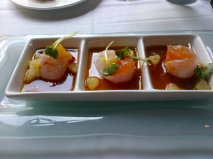
Crudo: Raw salmon and fluke dressed with Meyer lemon and ponzu sauce

One very popular dish often found on menus is “crudo”, literally, “raw”, but referring to raw fish. This can take on many guises, one or more types of impeccably fresh fish in a seasoning or with a dipping sauce. It’s elegant and, other than finding a totally reliable source for the fish, easy.

Other examples are tuna carpaccio and tuna tartare, the same sourcing issues, but simple as can be, just raw tuna, your best olive oil, and a sprinkling of sea salt, maybe a dash of parmesan or shaving of white truffle. Perfection.

Incidentally, the name tartare, as in Steak Tartare, has nothing to do with the myth regarding Tartars (or Tatars) riding around the Steppes of Central Asia with their steak under the saddle to tenderize it. Raw, chopped steak was traditionally served with tartar sauce (and that was named by the French for the Tartars), hence an enterprising early 20th century restaurateur came up with the name.

Then there’s ceviche. Whether it’s raw or cooked depends on how you define “cooked”. Applying heat to proteins will denature them, the same effect as soaking in an acidic liquid such as lemon or lime juice. Some traditional ceviche, particularly shellfish like shrimp or lobster, is cooked and then marinated. One of my happiest ceviche memories was in Playa del Carmen, Mexico, where the local version included vibrant jalapeno peppers.

Enjoying sushi near Tsukiji Market

A favorite travel memory is of Tsukiji, the giant wholesale market area in Tokyo, best known for its fish division, and more specifically, for crack of dawn auctions of tuna sourced from around the world, and every other kind of seafood imaginable. Because the market has become so wildly popular that tourists started impeding business, not to mention safety concerns (FAST forklifts racing by), access is now strictly limited. But, it’s worth a visit, and a sushi breakfast at one of the many restaurants surrounding the market is a treat not to be missed.

The only time I’ve felt unsafe approaching raw fish was in the mountains of Japan, at a tiny, family owned ryokan (inn) where uncooked fish from the stream was served. Because the parasites that affect land animals can affect humans, eating uncooked fresh water fish can be dangerous. But the host would have lost face (and we as well, having said we eat everything) had we not consumed it. What to do? Dip it in the bubbling soup pot when they weren’t looking. There’s a solution for everything!
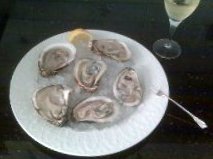
Slurp!

How else can you describe the delightful sensation of eating an icy cold oyster, briny and maybe with metallic or nutty overtones, and accented with lemon or maybe a splash of a sauce?

Oysters!

Looking at an oyster bar menu, you’d think there were dozens, if not hundreds, of species of edible oysters, but there are only five. Like grapes, oysters develop and taste differently depending on where they were grown. The chemical composition of the sea water, salinity, and temperature are among the factors that cause a particular bed to have its flavor and shape nuances.

All oysters which humans eat fall into one of these groups: Atlantic (bluepoints, Malpeques, Gulf oysters), Creuse (Europe and the Pacific Northwest), Belon (flat shaped), Kumomoto (tiny Japanese oysters now a mainstay in the Pacific Northwest) and Olympia (also small, the indigenous oyster of the Pacific Northwest).

Another mistaken notion about oysters is that they should only be enjoyed during the R months. This used to be true due to the deterioration in flavor and texture during the summer spawning months, not to mention unreliable refrigeration and spoilage in hot weather. The latter is no longer an issue and the spawning problem has been corrected by highly controlled oyster farming. Some oysters are now bred to not spawn at all.

A few hundred years ago, oysters were so common that everyone residing near the ocean ate them. Then the natural beds, including New York Harbor, one of the world’s largest at the time, started to falter. By the time the Titanic sailed 100 years ago, they were offered only on the first class menu: plain and a la russe (dressed with with vodka and horseradish).

As the United States was growing westward, oysters were an important food shipped by train from places like New Orleans and the Chesapeake Bay, either tightly packed in barrels (oysters in the shell keep well for a long period of time) or shucked and either chilled or canned.

Two old fashioned oyster delicacies are stew (oysters poached in butter, milk, cream and a little Tabasco) and pan roast (stew plus Worcestershire sauce and paprika served over a toast square). New York’s Grand Central Oyster Bar still makes these dishes in the same steam heated, 1 – 2 portion pots used 100 years ago.

Fried oysters are another decadent treat, especially when tucked into a po’boy sandwich eaten while strolling New Orleans’ French Quarter.

Oysters Rockefeller (baked with a thick sauce, greens and spices) is probably the best known of the hot oyster dishes, but there are countless others, Bienville (richer sauce, mushrooms, shrimp and cheese) and Suzette (bacon, green and red pepper, a little like clams casino) among them.

Every oyster lover has their preferences.  My favorite is the flat Belon, unfortunately the most expensive and hardest to find here in the United States, but the most flavorful. I like medium sized oysters the best; giants are just as tender and tasty, but a little unwieldy to eat. I’ll take oysters from as far north as possible, finding those from Southern waters to be less flavorful.

Then there’s the debate about garnish: cocktail sauce or lemon or mignonette (shallot/vinegar sauce, very popular in France) or maybe a few grains of caviar. I’ll take lemon any day.

Oyster Plate

Special plates are made for serving oysters on the half shell, indented to keep the shells from sliding around.  A plate with a reasonably high rim, covered with crushed ice from the fish market, works just fine.  And there are oyster forks, a nicety but certainly not a necessity.

All oysters can make pearls by building a smooth surface around a particle irritating it, but those that make jewels are not eaten by humans. Tales of finding valuable pearls in oyster bar orders are urban myths.

Tiny pearl resting on black spot

Morning in Myanmar

Schwedagon Pagoda, Yangon

Yes, the emerging political news is exciting, but so were the chili laced noodle soups that were part of every breakfast during my 2011 visit there.

Dawn in Bagan

The current news coverage is stirring up wonderful memories of what a fascinating, sometimes bizarre, place this is.

Formerly known as Burma, it is a genuine third world country, incongruously dotted with pure gold pagodas, some topped with priceless jewels.

The food is not why you go to Myanmar, but it is delicious, a cross between Thai and Indian flavors. Unlike peripatetic gourmet chefs who eat everything in sight, this normally intrepid eater was very careful to limit her menu to hot foods, avoiding anything room temperature other than in the hotels.

I loved the eggplant dishes and ubiquitous curries, especially the ones made with butterfish, a large smooth river fish which tastes a little like swordfish. Much to my surprise, I came across wines made in Myanmar, drinkable and an inexpensive alternative to the few pedestrian and pricy imports available.

One supposedly tasty treat I declined to sample was fermented tea leaves, a room temperature snack which looked and smelled about as appetizing as it sounds, particularly having seen buckets of it in the market swarming with flies.

Arriving in Yangon (formerly Rangoon) is a study in contrasts. On landing the first time, the third worldliness smacks you in the face. But returning there from an excursion north, to much more rural Bagan, felt like being back in civilization.

Internet and email usage are severely restricted (if you can get on at all), and I know some of my friends worried when I went email silent for several days while there. Credit cards are not accepted (most hotels have signs to that effect) and ATMs do not exist; you trade crisp $US for local currency, the newer the bill, the higher the exchange rate, and old bills aren’t accepted at all.

The culture shock is compounded by the strange traffic pattern of driving on the right in cars with the steering wheel on the right. This was explained by my tour guide: “When we got rid of the Brits, we changed the driving pattern immediately, but the cars, all used, still come from Japan” where they drive on the left.

Enjoying a Cheroot

On a totally non-culinary note, I was fascinated by cheroots, cigars made of tobacco and wood chips wrapped in corn husks, traditionally popular in Myanmar, although I only saw older people using them. It is rumored that the aroma permeates one’s skin, and this deters mosquitoes, but this may just be a dubious excuse for a questionable habit.

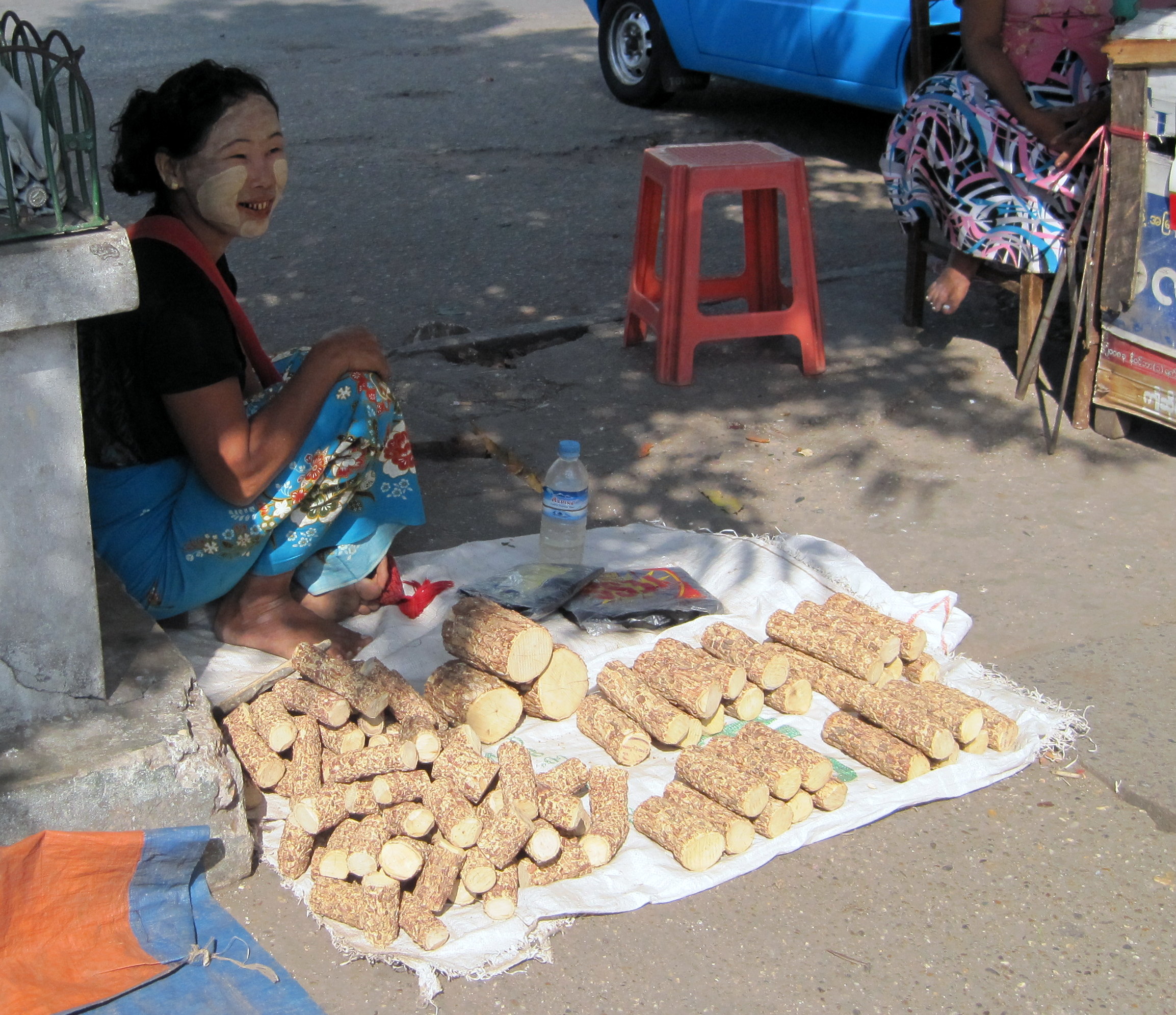
On another cultural note, I am surprised at the near absence of thanaka in the recent news photos (other than the April 4 page 4 photo in the New York Times) and as I was viewing the trailer for the The Lady, the new film about Aung San Suu Kyi. This astringent paste made of tree bark is ubiquitous in Myanmar, worn primarily by women as makeup, applied either in smears (as one might put on blusher) or in elaborate designs. There is even a thanaka museum where you can sample it.  Any takers?

Thanaka Vendor

Bottom line, visiting Myanmar was a fabulous experience, but I would not recommend it without a good guide, given cultural, language, and logistical challenges. Absolute Travel (whom I used) http://www.absolutetravel.com/ is a great place to start.

MyMEGusta Reviews: Peeking Behind the Wallpaper, by Arno Schmidt

Arno Schmidt, one of the leading chefs of his day, has now published a lively collection of memoirs and anecdotes focused on what really goes on in hotel food and beverage, some at the highest echelons, spanning three continents and nearly a half century.

Starting the old fashioned way, as a lowly teenaged kitchen apprentice in post-war Austria, and eventually rising to be Executive Chef at stellar properties like The Plaza and The Waldorf Astoria, the author paints a vivid picture of life behind the scenes, and how the industry evolved over the course of his long career.

One of my favorite anecdotes has to do with dignitaries meeting at a hotel in Geneva, any of whose illness could have derailed delicate negotiations on Indo China (e.g. the partitioning of North/South Viet Nam), as the chef recalls dangerous (by current standards) food safety procedures which could have killed off, or at least sickened, major players and caused an international incident.

A breakthrough innovation during his stint at the Waldorf Astoria was Chef Schmidt’s hiring the first full-fledged female chef at a major hotel, Leslie Arp Revsin, a crack in the glass ceiling which enabled future generations of women to aspire to jobs never before open to them. She was among the women who prepared a 1978 Showcase of Women Chefs dinner there for Les Dames d’Escoffier, an organization of women leaders in food, beverage and hospitality (www.ldei.org). (Full disclosure, I’m a member, and remember that dinner!)

Photographs of elegant hotels and dining rooms are complemented by actual menus interspersed among the stories. And, there are delightful descriptions of how foods were prepared in kitchens with coal burning stoves, long forgotten in our age of high tech. The Wiener Schnitzel at a hotel near Salzburg, Austria in 1949, described in delicious detail made me think of the perfect, puffy and fresh and greaseless example I enjoyed in Vienna just a few months ago.

But the real fun lies in the stories of interactions among the “players”, truly little armies of workers who make things like seamless banquet service seem easy. For example the chapter about the Waldorf Astoria, goes to great detail about the complexities of leading a team to get great food out via multiple channels – private clubs, huge banquets, room service, and, yes, several restaurants – efficiently and economically in an often highly politicized environment.

For more information, or to purchase a copy, go to http://www.arnochef.com/ .

From Deadly Mush at Sea Level to Spargelfest at 35,000 Feet

On these beautiful days of spring, thoughts go to those pointy treats poking their heads up as the days get warmer: asparagus!

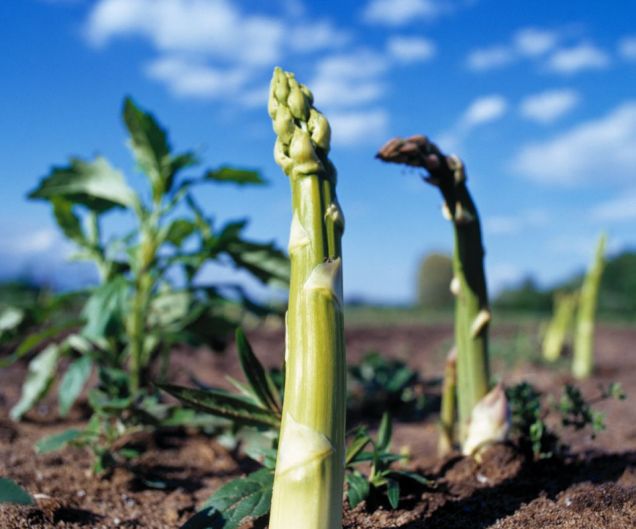
The Asparagus Emerges

But they have not always been good thoughts.  Growing up near Hadley, Massachusetts, the self-proclaimed “Asparagus Capital of the World”, meant eating it, a lot, in the season. Cooked to death, never peeled, this asparagus was vile, its acrid flavor reminiscent of the abominable olive green stuff in cans.

It was not until years later, when I had properly cooked asparagus for the first time, that I realized what all the fuss was about and became an asparagus lover.

In these days of globetrotting foods, we can get very good fresh asparagus all year round, but well traveled asparagus simply is not as good as the fresh product available from farmers’ markets or, at the farm stand, harvested in the morning and in your pot later in the day.

Green and White Asparagus

Native to the Middle East, asparagus inspires festivals every year throughout Europe, where white asparagus is the norm, versus the green which is most popular in the United States.

The only difference between the two is in the growing method for the white known as “hilling”, more complex and expensive, as the stalks are kept literally in the dark, buried under mounds of dirt, preventing the development of chlorophyll. When the little purple heads emerge, the farmer reaches deep into the soil with a sharp knife to cut at the bottom and, voila, a single white asparagus shaft

Harvesting White Asparagus

I remember the beautiful market around the cathedral in Freiberg, Germany, during asparagus season, known as Spargelfest: Bins heaped high with white asparagus of varying thickness and purity of its whiteness, all at different prices, and the shoppers presumably knew the difference among them.

Restaurants mirror the market and the home cooks in presenting special menus, for example three courses comprising asparagus soup, asparagus with hollandaise sauce, asparagus with ham.  It’s a reminder of what life was like before everyone took favorite vegetables for granted year round, and when they feasted on short-lived seasonal treats.

Asparagus with Hollandaise and New Potatoes

Lufthansa even offered a Spargelfest menu in transatlantic First Class that week, and it was delicious, all things which could be easily prepared in flight and really tasted good in the stratosphere (a novel thought).

Getting closer to ground, green and white asparagus are both easy to prepare, although need to be approached differently, and occasionally you’ll find purple (an expensive novelty).

One myth is that thin asparagus is tenderer than the thick. Not so. They have the same number of membranes, and so the toughness is more concentrated. The stalks are thickest at the start of the harvest, which ends when the spikes become so thin that they are like grass, left to mature for the summer, to reemerge the following spring.

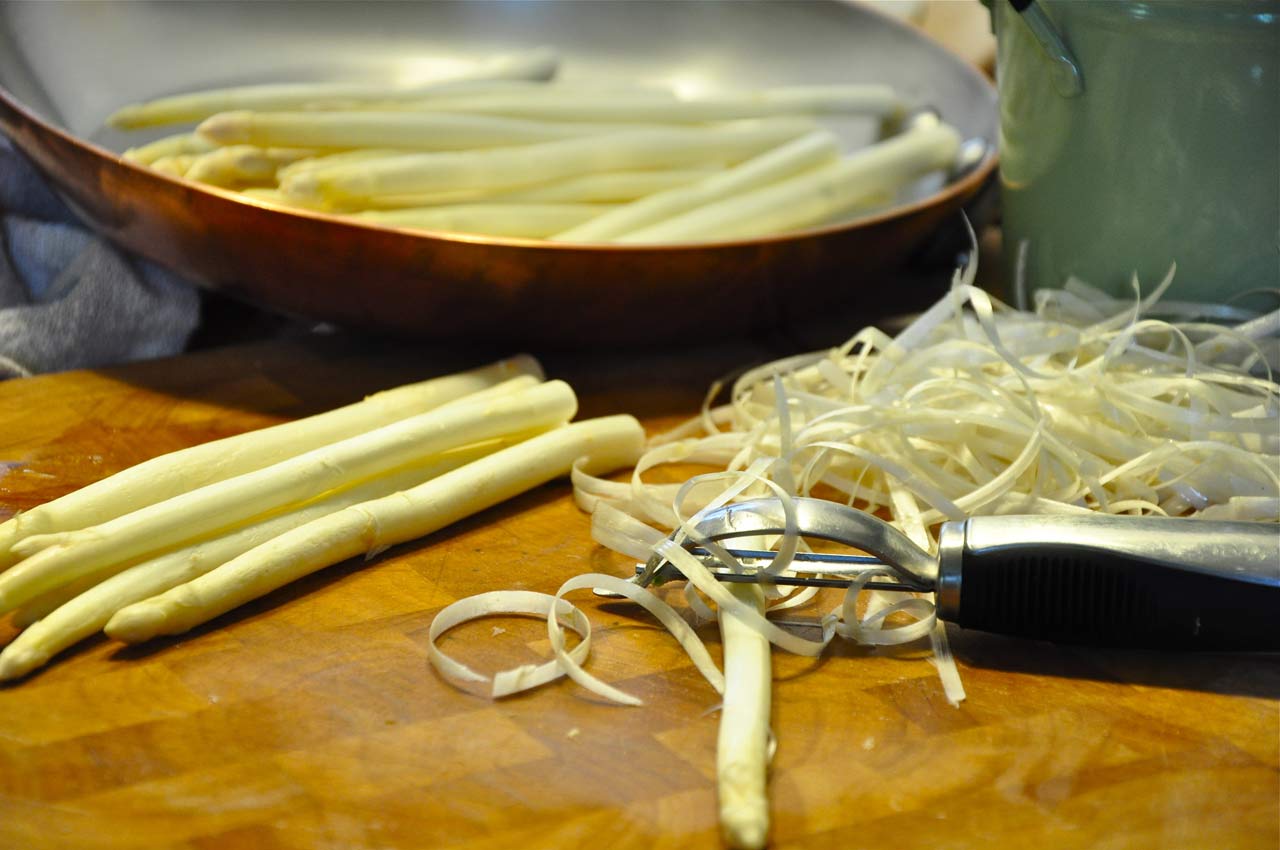
All asparagus needs to be trimmed at the bottom (there are two schools of thought: the snappers and the cutters); my approach is to look for where the woody part starts and cut. Green asparagus benefits from being peeled, but just the lower half, and cooked only a few minutes until tender. White asparagus is much woodier, and requires both trimming the bottom and nearly complete peeling, difficult as it breaks easily, and takes longer to cook.

Peeling White Asparagus

You don’t need a fancy vertical asparagus cooker. I use a wide, shallow pan with an inch of salted water, boil the whole stalks horizontally (makes for even cooking and less leeching of flavor and nutrients), dump into a colander and shock with cold water. Then it can be served whole or cut into bite-sized pieces for salads or to be reheated for a few seconds in butter or olive oil just before serving.

However you cook it, boiled, steamed, roasted, grilled, asparagus is delish year round, and a special treat if you live in a place where they pop up fresh.

Frozen Thoughts for Ireland’s Big Holiday

Saint Patrick’s Day went south forever for me when I had the misfortune to win a high school essay contest about democracy.

The sponsors (the Lions Club or something like it) had the bright idea to plunk me on their float in the Holyoke, Massachusetts, St. Patrick’s Day parade, the third largest in the United States after New York and Boston, at least at the time. Before I could respond with horror at the thought my mother gleefully accepted for me. I had to sit up there for hours with a frozen smile (due to my mood and the extreme cold) in a formal dress and borrowed mink stole. Not good.

I often wonder why corned beef and cabbage has become so wildly popular at this holiday. If Americans really liked it, they’d have it more often.

Irish Smoked Salmon

Made well, it’s a good dish. But the watery steam table meat and overcooked cabbage that make their appearance every March 17 are not representative of Irish cookery, although it certainly is true that these inexpensive foods have long been staples in the Emerald Isle.

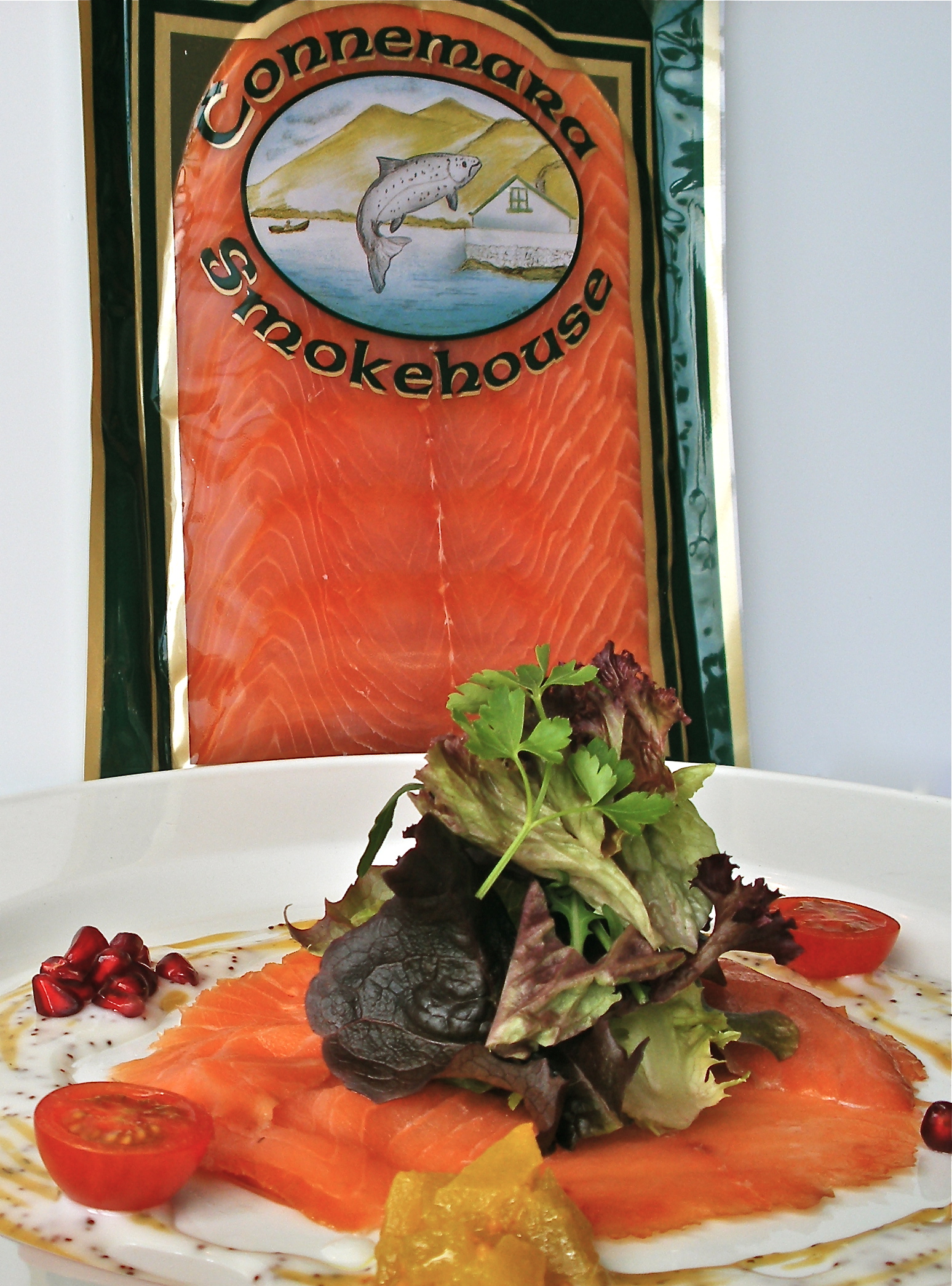
Instead, give me some nice Irish salmon. Travelers to Ireland find this wonderful fish is widely available, and the restaurants come up with delicious preparations.  Smoked Irish salmon is also a great treat, and available at good delis here.

Then there are the Galway oysters, another goodie for the traveler to seek out. And, for that matter, any kind of seafood will be a find on this little island.

Galway Oysters and Guinness

The quintessential Irish stout, Guinness, makes a big St. Patrick’s Day splash, pumping large sums of money into promotions to gain the largest possible share of this big beer drinking festival. It is actually lower in calories than most beers (other than the “light” beers), and is a classic accompaniment to those famous oysters.

As for other beverages, Irish whiskey is like a cross between Scotch and Canadian: in a nutshell, the same ingredients as Scotch with the Canadian production method (no smoking of the barley). I’ll leave that, Irish coffee made with it and green beer, to the leprechauns.

On the vegetable side, my favorite is Colcannon, a homey dish which is incredibly easy to make: boiled potatoes and chopped cooked cabbage (or kale) mashed together with butter, salt and pepper.  If you really want to be decadent, make a pool in the center and throw on a pat of butter (maybe some real Irish Kerrygold in honor of the holiday).

Colcannon

I’ll celebrate this year’s warm weather St. Patrick’s Day by avoiding parades and sipping some Vinho Verde (green wine, not from the color but because it is bottled and consumed very young) from Portugal. And maybe roasted salmon with steamed baby bok choy, not very Irish, but in the right spirit.

Shell Game: Bivalves, Tubers, and A Baby Cow

I had the most delicious scalloped potatoes the other night, and was musing on how it happened that this delectable mélange of potatoes and dairy had the same name as an elegant shellfish, not to mention a classic way to cook veal.

The short answer comes down to the concept of a shell, thin and flat, and the Old French word escalope meaning shell. From that came scaloppini for thin, flat slices of veal, and the word scallop for the seafood which has the distinctive shell shape. And that shape is so iconic that baking dishes were invented in its shape; when rich, creamy, cheesy potatoes were baked in them, they were called scalloped potatoes. (But this begs the question: is it because the taters are in thin, flat slices? Or both reasons?)

The Distinctive Shape

The best scallops I have ever had were in Nova Scotia, medium sized nuggets from Digby Bay which had a sweet, almost nutty flavor. And every restaurant sampled knew how to cook them properly, seared on the outside and barely warm on the inside.

Diver scallops are all the rage now in the U.S., and here’s why:

First, they tend to be fresher and tastier because they are hand harvested and suppliers charge a super premium price for them, rushing them to market. Whether ‘diver’ or not, look for ‘dry’ scallops which means they were not soaked in a brine after being shucked at sea and cruising for days, absorbing water along the way, which dilutes the flavor.

Second, the harvest doesn’t disturb the sea floor and other denizens of the deep like mechanical dredging does.

Most scallops in the market are labeled sea (big) or bay (small). There are occasional delights such as Cape scallops or Nantucket Bay scallops whose season is just finishing.

Scallop shell on the Pilgrim's Hood

Scallop shell on the Pilgrim's Hood

Nantucket Bays were listed on the menu at the wonderful Le Bernardin last week, but the waiter explained that they were not available, their season over. Ever curious, I asked New Wave Seafood in Stamford about this, and was advised that no, the season’s not over, but close, and what’s available is astronomical in price. I guess even Le Bernardin has to “86” some items from time to time to avoid serving molecular size portions or adding impromptu surcharges.

What we call scallops have much more interesting names in French and Italian.

The scallop shell was the insignia for the Order of Saint James in the middle ages, related to the legend that he had miraculously saved the life of a king, who emerged from the sea covered in scallop shells. Pilgrims to Santiago (St. James) de Compostela in Spain were recognizable by the scallop shell they wore on their capes or cloaks.

Hence, the French refer to them as Coquilles St. Jacques (shellfish of St. James) and the Italians as cappsante (capes of the saints).

When you encounter scallops in French markets, the pretty pink coral is usually attached, making for an even more attractive and tastier dish. Here in the U.S., you’ll rarely see the coral, with the rare exception of some diver scallops. The reason for this ties to the ocean ride most of our scallops take before coming to market; the coral is more perishable then the muscle, and doesn’t hold or ship well.

And one last word on scallops. Does anyone remember the myth that cheap scallops were really meat punched out of skate? Anyone who has ever eaten skate knows that it is yummy, but that neither the flavor nor the texture is remotely similar to scallops.

A Fishy Federal Offense

My first (and only, hopefully only) experience with being challenged at Customs involved a package I was asked to bring from Paris many years ago.  I witnessed it being packed, and it never occurred to me that I’d be stopped because of it.

Nor that a 20 something with a mysterious package would raise suspicions.

When challenged by the authorities at immigration, I was honest about the contents. The questioning escalated. Perhaps they were giving me a chance for a reduced prison sentence by confessing.

When the increasingly hostile Customs inspector finally unwrapped the package, his horror was palpable as smelly juices ran all over his work station. Offensive, indeed.

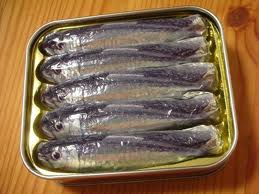
“I TOLD you it was salted sardines.”

Everyone talks about sardines, but let’s be honest.  Other than the food-loving readers of myMEGusta, I’ll wager that most people who use this phrase, particularly when referring to the NYC subway system, have never personally opened a can of sardines.

Rush Hour on the IRT

And that’s a shame, because these little fish are loaded with vitamins, minerals and omega-3s, and they make for a quick, delicious lunch, especially if partnered with some crunchy bread.

Parisian bistros offer them (yes, out of the can) as the first course in prix fixe menus, and “artisanal” canned sardines are to be found at tony food stores here and in Europe.

Named for the Italian island Sardinia, the true sardine is a small type of pilchard, a fish more widely known in Europe. Sometimes, the least expensive canned “sardines” in supermarkets are really little herrings or sprats, but tasty all the same.

Sardines on the Hoof

They occasionally show up fresh at the fish market, and are a treat on the grill, with a little salt and pepper, maybe olive oil.

Another classic within our grasp is the famous Sicilian pasta con sardo, made of fresh sardines (although good quality canned will work just fine), raisins, fennel and other ingredients depending on who your a) cookbook author or b) Sicilian grandmother is.

Hot off the Grill

Slimed! Happy Mardi Gras!

It’s a celebration of all things Nawlins, like slippery okra, steaming beignets and shrimp shrimp shrimp.

New Orleans is what I think of on Fat Tuesday, although Venice and Rio also have amazing traditional festivities on this day before Lent begins.

The two most notable cuisines of New Orleans are Creole and Cajun, although the line between them  can blur, particularly as chefs get creative and tastes evolve.  Based on visits some time ago, Commander’s Palace would be my favorite for Creole style, and K-Paul’s Louisiana Kitchen for Cajun.

Creole cuisine can be deliciously complex, often rich, and is based on the mélange of cultures who settled in Louisiana: people from France, Portugal, Spain and Africa. French cuisine is its closest relative, and many classics of Creole cuisine have French sounding names like Etouffee and Remoulade (which bears little resemblance to its Gallic namesake).

Cajun can be complex as well, but is more earthy and evokes the memories of struggles in a new country as immigrants from Acadia (“Acadians” morphed into “Cajuns”), also French speaking, learned how to adapt to their new environment and ingredients.

Think of Redfish with Lump Crabmeat Hollandaise and you’re thinking “Creole”. Think of Blackened Redfish, and you’re in Cajun territory.

Okra is a favorite of mine in any cuisine, and it’s a staple in New Orleans. Calling okra “gumbo” is a common misnomer. Gumbo is a stew. Okra is sometimes an ingredient, its gooey texture serving as a thickener. Ground sassafras, also known as file powder, is another thickener, as is roux (flour/butter paste), and sometimes a gumbo will contain all three.

Beignets, French doughnuts with a sprinkle of confectioner’s sugar, are another glory of New Orleans and at their best at Café Du Monde with a cup of café au lait made with their signature coffee/chicory blend. They’re available elsewhere, and you can take home a box of mix. In my opinion, they are a treat worth the fat and calories, but only if enjoyed on the spot, hot from the fryer.

Andouille sausage is another favorite with French origins, but with little in common with its forebears. The delicious andouille sausage of Louisiana is part of the Cajun repertoire, hot and spicy, and traditionally made of pork, although chicken and turkey versions are available for the health conscious. They bear no resemblance to French andouille and andouillette both made of pork chitterlings (intestines).

Bananas Foster, a dessert classic which sounds innocuous enough (How bad can a banana be for dessert?) is a great example of New Orleans decadence: bananas braised in butter, brown sugar and banana liqueur, flamed in dark rum and served over ice cream.

How perfect is that for Fat Tuesday?

You Ordered The WHAT?

There’s a lot of fun to be had in the names of foods.  Some can sound terrible, even disgusting, and be just delicious. Some dishes can have names that have nothing whatsoever to do with what is in them. And some are just funny.

When’s the last time you saw Crapaudine (crap-oh-DEEN) on a menu?  There is a reason this dish doesn’t get out much: Who wants to ask for something that sounds that rude?  Worse, if you know a little French, you realize that it means “toad style”, sometimes interpreted as “frog style,” and I’m not talking about the legs. In reality, it’s just a small bird, usually squab, quail or chicken, flattened so that it will cook evenly and make a nice presentation which, by the way looks a little like a toad.

How about some Stinko instead?  If you’ve enjoyed osso bucco, braised veal shank slices, you’ve been close. Stinko is simply the whole shank, usually served by carving long slices with the grain, tender because it’s been cooked so long.

Had any Tinkling Bells lately? This is a relatively simple Chinese dumpling like dish of seasoned pork wrapped in bean curd and deep fried. The name comes from the crunch you should hear when biting into it.

Then there are the things that just sound unappealing, combinations that simply should not be.

Chicken and Waffles is one of these.  If you’re from the North, this sounds bizarre, but in reality it’s a favorite of Southern cuisine. We don’t think twice about combining fried chicken with cornbread or biscuits, right?

I was reminded of this treat when filling out a Facebook quiz: The Food List Challenge, 100 Foods to Eat Before You Die. The food referenced in the quiz, Chicken and Waffles, is not just a random choice of things one might eat at two different meals. Rather, it is a classic pairing, a heavenly juxtaposition of crispy fried chicken on the same plate as waffles with butter and some kind of syrup.

My introduction to this delicacy was at the Brown Sugar Kitchen in Oakland, CA (www.brownsugarkitchen.com/). I was skeptical, but then the impeccably buttermilk fried chicken arrived shatteringly crisp and greaseless, accompanied by a giant, extremely crunchy waffle, brown sugar butter and apple cider syrup. One bite and I was in love.

The combination of salty/sweet/crispy was amazing, akin to kettle corn but with the added complexity of the perfectly seasoned, juicy chicken. Of course, the chicken has to be perfect, as well as the waffles.

Some things have confusing names.  Nobody thinks that spaghetti sauce is made out of pasta, and everyone knows that lobster sauce in a Chinese restaurant is a sauce meant to serve on lobster.

But I recently heard Chris O’Reilly interviewing one of his young musicians on his NPR program, “From The Top” (www.fromthetop.org/) and going on and on about duck sauce and ice cream actually went together. Of course they do; it’s not a sauce made out of duck, it’s a sweet, fruity condiment meant to go with duck.

Post Navigation