myMEGusta

Named for things that please me (“me gusta” in Spanish) and rhymes with balabusta (Yiddish for “good homemaker”).

Sharing: Blizzard Booze

For all of us in the Northeast about to be snowed in, here is a link to Arthur Shapiro’s delightful posting about libations to savor as we weather Nemo the storm:

http://www.boozebusiness.com/2013/02/08/blizzard-booze/#.URU1iWzR1n0.facebook

myMEGusta could not have come up with a better posting on the subject!

Flaming Brown Cheese and other Cold Weather Treats

Did you hear the one about the cheese fire in Norway?

Gjetost Cheese

Gjetost Cheese

Actually, it’s not a joke. Recently, a truck carrying 27 tons of brunost, a sweet, high fat cheese sold in the United States as gjetost, burned for over six days blocking a tunnel in Northern Norway. “This high concentration of fat and sugar is almost like petrol if it gets hot enough,” explained a public official to the New York Times. Of course, the cheese is normally consumed like any cheese, not flambéed unless there is some kind of accident.

When you’re enduring Arctic, or sub-Arctic, temperatures, either because you live in Norway or Sweden, or in so many parts of the United States plagued with this winter’s unusually cold weather, it’s easy to develop an appetite for things like a sweet, fatty cheese, loaded with the calories your body craves.

We won’t go into the subject of blubber, but myMEGusta’s Eskimo readers are welcome to add their Comments.

Lutefisk

Lutefisk

But let’s look at some other treats of the north.

My personal favorite, and I am the only non-Scandinavian in the world who likes (no, LOVES) it, is lutefisk. Cod or other white fish which has been preserved in lye, lutefisk has the dubious honor of being the world’s most ridiculed fish.  People claim that it smells up the house, and then tastes horrible. Well, myMEGusta is here to tell you that the lutefisk you buy today has been pre-soaked and de-odorized, so the old wives’ tales of the smell are just that, anachronistic and just not true any longer. Because of how it was cured, the fish has an amazing gelatinous texture, almost melting in your mouth. My favorite way to enjoy lutefisk is on a very cold day, swimming in cream sauce (perhaps seasoned with a little mustard) and melted butter, with boiled potatoes and lefse, a kind of potato pancake, on the side. Oh yes, in a restaurant in Stockholm.
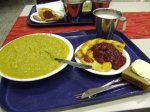
Pea Soup with Pancakes and Lingonberries

Pea Soup with Pancakes and Lingonberries

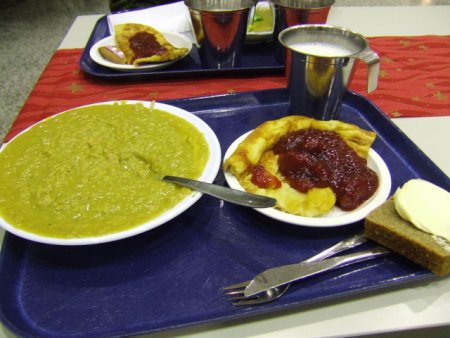
Another wildly popular Swedish dish, traditionally served on Thursdays, is pea soup accompanied by pancakes and lingonberries. This pea soup is not the insipid, overly pureed stuff in most cans, but rather a thick, chunky mélange with the aroma of smoked pork, and a perfect companion to the hot pancakes.

Fondue

Fondue

Moving south to the Alps’ frigid high altitudes, there’s fondue. Quite the fad in the United States in the 60s and 70s (the joke was how many fondue pots people got as wedding gifts), “fondue” came to mean anything dipped in a pot. You had beef fondue (tenderloin deep fried and served with dipping sauces) and the emergence of chocolate fondue.  But the real deal is a cheese mélange (including white wine and perhaps seasonings) into which bread is dipped, perfect for an apres-ski supper. High in calories and fat, another goodie to enjoy on a cold night.

Hot Wine at the Christmas Market in Prague

Hot Wine at the Christmas Market in Prague

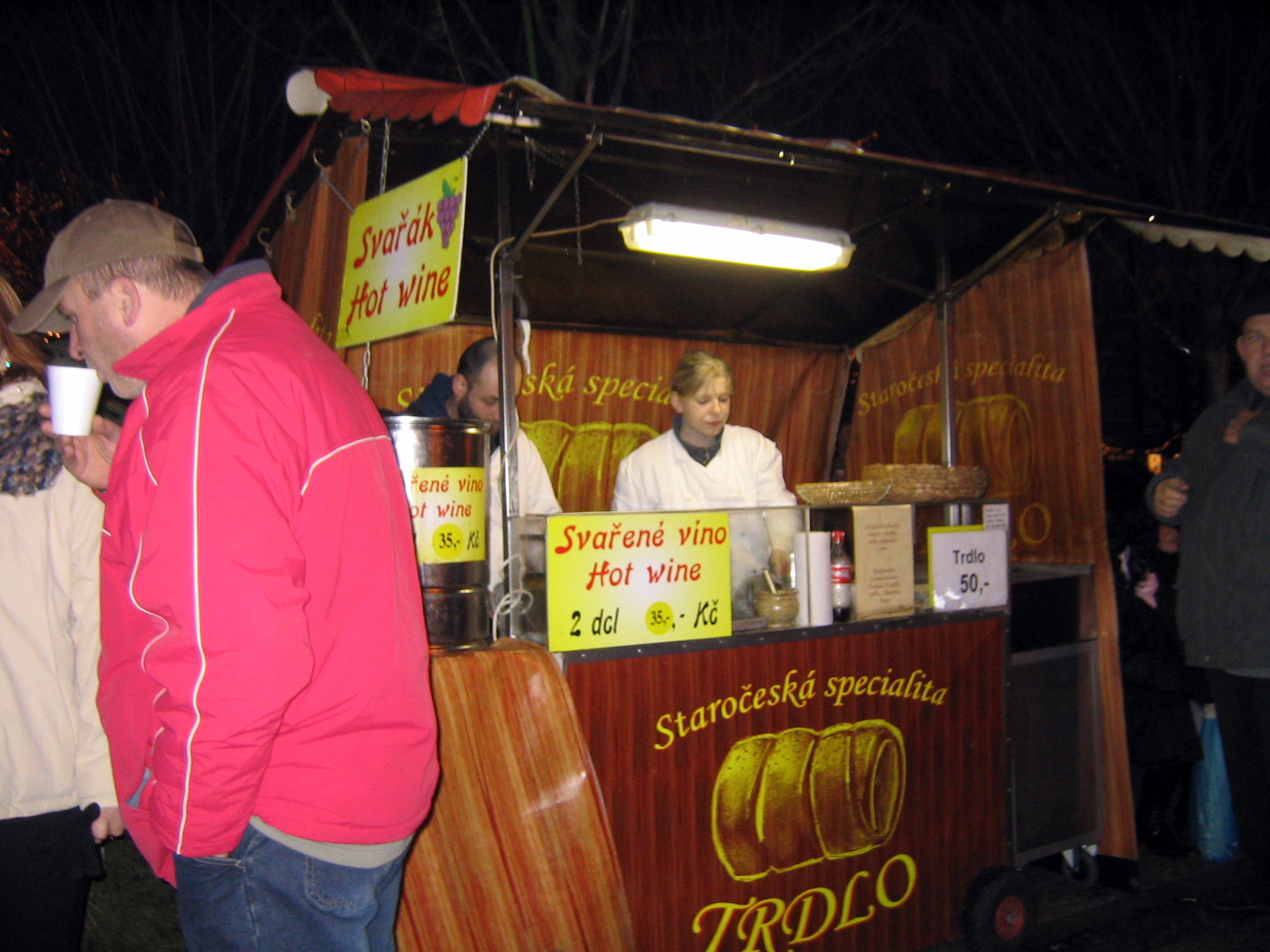
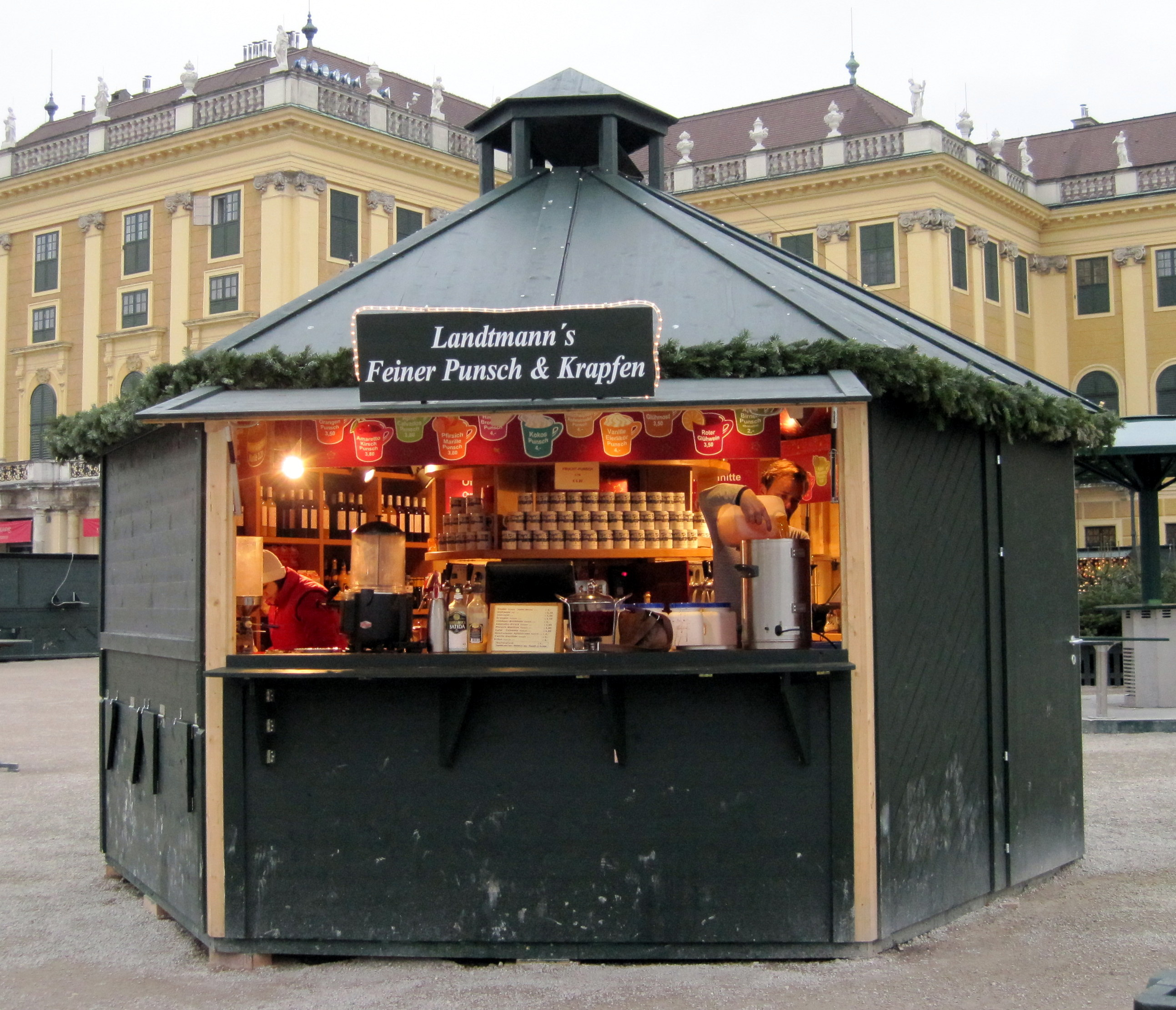
Then there the hot beverages which are to be found in little huts in the Christmas markets that dot Northern Europe in December: wine punch, mulled wine, gluh, gluehwein.

Wine Punch at Schönbrunn Palace in Vienna

Wine Punch at Schönbrunn Palace in Vienna

Every culture there has its own variation, but they’re all a combination of a wine and/or spirit (red wine, port wine, brandy, vodka) usually plus sugar, fruit juices/rinds and spices (cinnamon, cloves, and cardamom being the most popular), sometimes even raisins or nuts, all served warm.

You can even find hot mead, made from honey.

Hot Mead at the Christmas Market in Prague

Hot Mead at the Christmas Market in Prague

But what are the best of all of winter’s culinary and beverage treats? The ones consumed in front of a roaring fireplace.

Cachaça and Pisco: Two New Dance Crazes from South America?

No, these are not variations on the cha cha or requiring disco balls and bad hair.

These are two of the most famous Latin American spirits, long living in the shadow of tequila and rum but now emerging in their own right in the United States and best appreciated in their signature drinks.

Caipirinha

Caipirinha

Cachaça (pronounced cah-SHAH-zah) is the classic spirit of Brazil.  Made from fermented cane sugar, it is similar to rum (made from molasses) but has a more assertive flavor.

The  Muddler - Also a handy tool for old fashioneds and mojitos

The Muddler – Also a handy tool for old fashioneds and mojitos

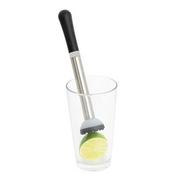
My initial encounter with it was at the Discophage, a long deceased Brazilian restaurant in Paris (which readers may recall from reading about the bean dish, feijoada, on May 15, 2012) where caipirinhas (ki-pah-REE-nyas) were made one by one: muddling fresh limes with sugar then adding cachaça and stirring with ice. Because the lime rinds are in the drink, and get crushed, you pick up a delicious accent when the lime oil is released.

Sadly, while real caipirinhas are available in good Brazilian restaurants, most of them push the use of vodka instead of the real deal, for a “milder” drink. This is a shame, as they are usually the same proof (alcoholic strength) and cachaça gives a much more interesting flavor to the cocktail.

Another less well-known use of cachaça is in drinks known as batidas (bah-TCHEE-das), infinitely variable blends incorporating fruit juices, and usually coconut milk or condensed milk. These are delicious, refreshing and laden with calories.

Moving to the West coast of South America, we come to pisco (PEE-skoh), a grappa-like unaged grape brandy, claimed by both Chile and Peru as its own.

Pisco Sours at Pio Pio

Pisco Sours at Pio Pio

The most popular way to enjoy pisco, in both countries, is the pisco sour – a mélange of pisco, sugar, lemon juice and egg white (for the froth) shaken vigorously or blended with ice and garnished with bitters.

My initial encounter with an alleged pisco sour was at the Santiago Hyatt on the eve of a flight to Ushuaia, the southernmost city in the world where our group would board a ship for Antarctica. Alas, made in bulk for a large reception, it was just OK, a pleasant enough beverage but nothing special.

The next time was in Mallorca, Spain, made by a native of Peru with pisco from Peru. And it was delicious. But, the mixologist was not happy; it wasn’t good or authentic enough, in part because there was no blender in the villa. “You have to try this in New York at a good Peruvian place.”

And the pisco sours at Pio Pio (at least in the Hell’s Kitchen branch) are heavenly.

I can’t wait to try one in Lima!

Don’t Mess with a Crone when It Comes to Crones

OK, if you look like George Clooney, we’ll let you get away with it. And perhaps schedule a private myMEGusta tutorial.

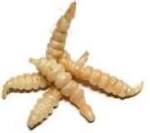
Crones

Crones – A Vegetable

The scenario: Bouchard, a fabulous French restaurant in Newport, Rhode Island.

The protagonists: Above-mentioned waiter advising one of my dinner companions that the squiggly looking things in his Petite Marmite were NOT artichokes, rather they are crones, having “nothing whatsoever to do with artichokes, Miss.” (That’s me. He gets points for not saying “Madame”.)

Actually, we were both right and both wrong.

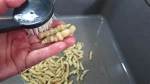
Preparing Crones

Preparing Crones

These little tubers are known variously as Chinese artichokes, Japanese artichokes, crones, crosnes, chorogi and knotroot.

Native to Asia, it is said that the First Western cultivation was in Crosne, in northern France, hence the name. A member of the mint family, they still grow wild in north China, and have many relatives in the western hemisphere, what we could call weeds. Some websites will counsel as to how to forage for them; MyMEgusta does not advocate this unless you are really certain of what you’re looking for, as crones and their relatives also have medicinal uses.

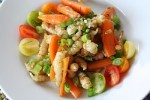
Crones in Salad

Crones in Salad

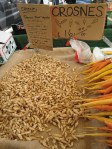
At the Market

At the Market

Crones are comparable to jicama or water chestnuts in flavor and texture. They can sometimes be found fresh in upscale or farmers markets, as well as Asian markets where you’ll also find them salted and/or pickled.

Pickled Crones

Pickled Crones

Treat fresh crones as you would water chestnuts in stir fries, or add them to soup or salad for a nice crunchy accent. They are about 23 calories per ounce, not bad considering that a little will go a long way to make a dish visually and texturally interesting.

Snail Mail!

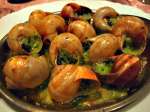
escargotRemember the scene in Pretty Woman where she attempts to eat an escargot and it goes flying? THEY DID NOT MAKE THIS UP! The exact same thing happened to me many years ago in Paris, at the venerable Chez l’Ami Louis, as the slippery snail became a projectile, catapulting from my tongs to sail clear across the room, blessedly not hitting anyone.

As scary as it appears at first glance, the classic French preparation of snails, baked in garlic butter, is one of life’s most delicious joys.

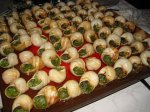
Ready for the oven!

Ready for the oven!

And it is one of the easiest things to make at home IF you do exactly what fancy French restaurants do: Open a can, rinse, make some garlic/parsley butter (or substitute olive oil), stick into shells (or not) and bake until they’re bubbly.

While there are many types of edible snails from land and sea, the most famous are the medium size European garden snails. They are grown commercially, harvested and processed, and are the mainstay for escargot lovers everywhere.

Escargot Farm

Escargot Farm

Before you start seeking them out in your back yard, beware! Wild snails may have ingested poisons, and even if they have not, require a lengthy cleansing process which can take days: fasting and/or purging with lettuce and cornmeal and/or soaking in vinegar and/or salt. Then you still have to clean and slowly poach them to tenderize and kill potential parasites.

If purchased alive, perhaps from an Asian market here (or a street market in Paris), they have to be carefully penned in, otherwise, escapees will wander off. To wit, a few quotable quotes from a website explaining the snail-from-scratch process: “Place all the snails in a well closed box” and “Place a screen or a piece of wood over the sink so you won’t be finding snails all over your kitchen.”

Sicilian Snail in the Wild

Sicilian Snail in the Wild

I encountered pretty little land snails in Sicily last summer near the ruins of an ancient Greek temple, but didn’t have the time or wherewithal to find out from locals if these ever found their way to the table as “babbaluci”.

There are snails from the sea as well, ranging from the tiny French bigorneaux which are eaten with a pin (and are close relatives of periwinkles), to the petit gris (small grey snails) to the giant conches (as in the famous Caribbean conch chowder), whelks, and even abalone. Scungilli over pasta anyone?

The Year of the Potato Pancake?

Latke!

Latke!

MyMEGusta had planned a delicious journey into the Land of the Latke this week. Then we found that latkes were ubiquitous. Every publication and blog around seemed to be on the same wave length, so the idea got set aside.

But, on reading, most are focused on recipes, traditional, updated, the usual melange, just like every November the world has a few too many “new” ways to make The Best Turkey Ever.

So, in a little salute to Hanukkah, here’s myMEGusta’s look at these nice, crispy treats (not to be confused with Rice Krispie Treats).

We often think of latkes in association with the upcoming Jewish Holiday, the Festival of Lights, beginning this year at sundown, December 8.

Around 167 BC, Jerusalem was seized by Syrian-Greek soldiers. A group called the Maccabees eventually succeeded in repelling them, but then was left the task of rededicating the Temple, which had been subject to sacrilege by the invaders. This rite required the burning of oil for eight days, but there was only a tiny amount available, enough for one day. But the oil lasted for the full eight days, hence the traditions of lighting the Menorah for eight days in remembrance of this miracle. Eating fried foods also became part of the tradition.

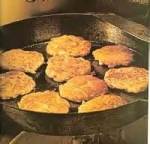
Having settled throughout Northern Europe, the Ashkenazi Jews made a tradition of enjoying latkes, potato pancakes, as a favorite food for this joyous holiday.

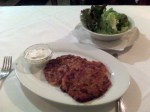
Root Vegetable Latke at 3 Axes, Vienna

Root Vegetable Latke at 3 Axes, Vienna

But, potato pancakes are a widely popular throughout that region, regardless of religious affiliation.

Just last December, I enjoyed a daily special of exceptional grated vegetable/potato pancakes at Vienna’s 3 Axes Restaurant, famous for its authenticity, where to get really good, old-fashioned Viennese dishes.

And, in a more hands on experience with potato pancakes as made in Poland, the wonderful Babi (a great expert in Polish cuisine) let me work with her and see how traditional “placki ziemiakowe”  or simply, “placki,” are made by hand in that Northern European country.  These came in two forms: single layed potato pancakes, and doubles with the potato dough sandwiching cooked cabbage, and are poached rather than fried (although many Polish potato pancakes are). Not to miss out on any decadence, these are served doused with browned butter.

Irish Boxty

Irish Boxty

Another example of this delicacy is found in Ireland, not what we normally think of as Northern Europe, but it is in the North and part of Europe, where potatoes and cabbage are staples.  These are called boxty, and look a lot like latkes to me.

May your days be many and your truffles be, too.

My first, and most incredible, black truffle experience was a very long time ago in Paris, dining at Alain Senderens’ first restaurant (eponymous, I believe).

It was a poached whole black truffle, over an inch in circumference, giant by personal truffle standards, resting in a pool of ethereal lobster soup. The aromas alone were heavenly, not to mention the decadence of eating a whole “black diamond”.

Fast forward to another occasion in France, wandering into Boyer Les Crayeres in Reims, France, exhausted from driving, a little too late for regular midday service, and asking if they could just make a salad. “Mais, oui!”  A few minutes later, out came perfect bread, flutes of Champagne, and deliciously dressed greens, covered in a blanket of shaved black truffles. This is what I call a nice, light lunch.

White and Black Truffles

Truffles are a kind of mushroom which grows wild underground, harvested with the assistance of pigs or dogs specially trained to be attracted to their unique aroma. There are hundreds of types of truffles, the most prized of which are the black ones from Perigord, France, and the whites from Northern Italy.

Many other types exist, of varying quality, some marketed honestly (and costing much less) and some sold as the prime types by unscrupulous dealers. There have even been mini crime waves in the major truffle hunting locations, as some poachers resort to violence because of the size of the prize.

Chicken “Demi-Deuil”

White truffles are just as much a delicacy as the black, although used quite differently.   While the black truffle is usually cooked (whether studding sausages or foie gras, or in slices under the skin of a roast chicken, called “demi-deuil”, of “half mourning”), the most common usage of the white is raw.

White Truffles on Risotto

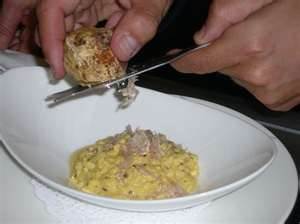
When shaved over a plate of hot risotto (or fettuccine, gnocchi, even roast chicken), the white truffles release an unmistakable and unparalleled aroma. Currently in season, white truffles can be found in some of the best Italian restaurants, shaved sparingly at tableside, often by the owner because they are so expensive, or by the gram weighed before and after they serve you. (Careful!)

This year, white truffles are retailing for $250 – $650/ounce.

White truffles usually come packed in Arborio rice, which will absorb flavors as they await being used. The most economical way to have a white truffle festival is to make your own pasta, splurge on a tiny white truffle and use a vegetable peeler to make paper thin slices, releasing the flavors and smells as you stand over the steaming plate.

Truffle Fries

Then there is truffle oil, sometimes made from the essence of real truffles, but more often from synthetic flavors, which is good reason to purchase from a top producer. A new “classic” is truffle oil on French fries, sometimes tossed with herbs. Now, those are empty calories worth having once in a while.

Chocolate truffles?  That’s for another day.

Defensive Dining

We’ve all been there: Mom’s favorite restaurant (“Voted #1 for Mexican in Zagat!” because there isn’t another Mexican restaurant within 100 miles) which doesn’t serve much other than over-processed factory food with lots of fat and no flavor. And, we go back every time because that’s where Mom wants to eat.

The corollary to this is the Dreaded Group Decision. This happens when everyone else wants to go for some form of food you simply don’t like, whether ethnic or just plain bad food. It gets exponentially worse in unavoidable business situations or someone’s birthday.

What to do?  Now is the time to think about what we all learned in Driver’s Ed, Defensive Driving. We need to practice Defensive Dining.

Unless they pose threats to life and limb (in which case Mom or the colleagues get overruled) these culinary minefields CAN be navigated successfully, sometimes even deliciously.

Here are myMEGusta’s Three Key Action Points for survival in unappetizing situations:

#1  Read the menu and look for the gems.  Look for local foods which might be actually prepared from scratch. Daily specials can also be the answer, but always ask the price before ordering. Check out the menu on the internet ahead of time. If it’s looking particularly dreary, call the restaurant and ask if they can modify dishes for you; for example, if they serve salad and have a grilled shrimp appetizer, ask if they’ll make you a shrimp Caesar. This way, you avoid the whole negotiation (“I’ll have to ask the chef”) while everyone else is ordering.

#2  Keep It Simple Stupid. KISS the complex dishes goodbye. They can’t destroy lettuce. Well, they can, but it’s much easier to mangle cooked vegetables. Order the chicken breast without any sauce. Shrimp cocktail is usually a winner (note “usually”).

When the problem is a serious matter of taste (some people just don’t like Mexican or Indian or Chinese flavors, and this is OK), look for the most simply prepared items. In a Chinese restaurant, for example, consider avoiding the usual “share” by telling everyone you’re on a diet and can only have steamed vegetables. If it’s Indian and spice is the problem, focus on the wonderful breads, maybe with a little raita (yogurt and cucumber).

#3  Take the Minimalist approach: The Poke and Push. This is especially potent when you are able to sneak in a snack before the meal so you are not starving. Order the absolute minimum (“I’m not really hungry. I’ll just have a salad. Dressing on the side.”), eat what you can stand to eat, and don’t worry even if your share of the bill is unfairly high. After all, you didn’t leave with unwanted calories and fat, not to mention potential ptomaine poisoning.

Another common challenge in many restaurants, even good ones, is portion size. Because food cost is such a small percentage of the real costs of running a restaurant (rent, staff, insurance, utilities), some operators load plate to build “perceived value”, which you, the customer, pay for. If you don’t want to overeat, waste food or carry out leftovers, just don’t over order. There is no shame in just having a salad and an appetizer (no main course), or sharing dishes.  Most good restaurants will divide portions in the kitchen (unless a dish requires elaborate, architectural presentation).

Recently, at the wonderful Capital Grille, a friend and I shared a (delicious) steak, and they even divided it before cooking so neither of us had to compromise on doneness. Now, THAT is good service!

The Lost Art of a Good Beating

No, myMEGusta is not referring to Fifty Shades of Grey.

Happiness in a Bowl

The next edition of Joy of Cooking will have an enhanced section on how to whip cream, because the 21st century readership hasn’t a clue as to how to make it. Even in the 80s, I remember people being impressed and stunned when the heavy cream and a wire whip came out, something they’d seen only TV.

More recently, in an Orlando, FL restaurant, two nearby diners were overheard talking about some hostess having freshly whipped cream with dessert, something neither had ever tried to make.

It ain’t rocket science. You start with heavy cream and you put it in a bowl and whip it. My mother, whose cooking skills were dubious, made it with one of those old fashioned eggbeater tools. Little electric hand mixers work just fine, too.

The eggbeater: It works

I prefer a wire whisk, or for larger quantities, the whisk attachment on the electric mixer. A little sweetening is fine, or other flavorings such as chocolate, but I prefer mine straight. When heading out to a picnic, put the heavy cream in a tight jar, keep cold until dessert time, then shake it. Voila, the miracle of whipped cream.

Strawberry Whipped Cream Cake

While I could be perfectly happy with a bowl of whipped cream and a spoon, most normal people prefer it as a garnish, or in combination with other foods.  Strawberry whipped cream cake is one of the easiest and most delicious treats when succulent local fruit is in season.

Sacher Torte Mit Schlag

The German phrase “Mit Schlag” is a mainstay in Vienna.  The famous Sacher torte is a little on the dry side, because the dollop of whipped cream added at the end is an intrinsic part of the dish.

The cream puff is simplicity in itself: A choux pastry filled with whipped cream.  Ten years ago, the Big E (formerly known as the Eastern States Exposition, New England’s version of a state fair) introduced a signature cream puff as the “official” dessert. It is worth the trip just to get one of these, not to mention the unique takes on lobster rolls in the different state buildings. (Note to self: ROAD TRIP to West Springfield next fall.)

Cream Puff at the Big E

The crowning glory of whipped cream is made from crème fraiche, a slightly fermented, high butterfat cream you’ll find everywhere in France, and in gourmet shoppes here. Mousseline is another delicacy. Featured in many French desserts, this is simply pastry cream into which some whipped cream has been folded in. This is not to be confused with Sauce Mousseline, hollandaise with whipped cream.

One cautionary note:  One of the first signs of spoilage in heavy cream is that it won’t whip up. If your heavy cream is refusing to morph into lovely cloud after a reasonable amount of beating, you should consider tossing it out.

Off With Their Heads!

Actually, myMEGusta prefers that her crustaceans – prawns and shrimp and langoustines – arrive intact, spiny heads and all.

Shrimp at the Seafood Market in Venice

When impeccably fresh and properly cooked, the heads of these little animals are briny and sweet, meant to be tasted then tossed.  When the little beasts need to be cleaned before cooking, the heads and shells can be saved, accumulating in the freezer until critical mass is achieved and a delicious shrimp stock is in the offing, perhaps as the base for a bouillabaisse or seafood risotto.

There’s a lot of confusion about what the difference is among these animals, if only because they look a lot alike.

First, shrimps and prawns are separate species from the langostino/langoustine group which, include spiny lobsters which are only distantly related to North Atlantic, or “Maine” lobsters. And this is why so many Northerners complain about the “lobster” in Florida and “lobster tails”. They are different animals with different flavor characteristics.

Scampi? Shrimp? Prawns?

The main difference between shrimp and prawns lies in who you are talking to.  In reality, they are two species, differentiated by the shape of their claws and other details, but constantly interchanged in the real world of fish markets and restaurants. In the US, shrimp tend to be smaller, but giant shrimp are often marketed as prawns on menus, especially Chinese. In the UK, they’re all called prawns.

Scampi used to be large shrimps (or prawns) grilled in butter or olive oil and garlic as they might be when freshly caught from the Mediterranean Sea in Italy.  Now the word connotes anything with those ingredients, even the tiniest of shrimp or chicken, cooked in any fashion and sometimes with wine, breadcrumbs or other ingredients in addition to the basics.

Langostinos are not widely known in the US, usually found clean and frozen, ready to toss into the pan.

Langoustines

Langoustines on a Seafood Salad with Cucumber Mayonnaise

I discovered my favorite way to eat langoustines years ago in Paris: Presented on a giant platter, heads on and fresh from the market with a bowl of freshly made mayonnaise for dipping.  First break off the head (taste and toss), then liberate the tail meat and dip. Perfection.

Post Navigation