myMEGusta

Named for things that please me (“me gusta” in Spanish) and rhymes with balabusta (Yiddish for “good homemaker”).

What Are You Smoking?

Gravlax

Gravlax

Salmon!

On a journey to Helinki, Finland, myMEGusta was reminded of how delicious and varied “preserved” salmon can be, in various guises.

The three best known are cold smoked (looks raw, tastes smoky, usually served sliced thin), hot smoked (looks cooked, also tastes smoky, usually served hot) and gravlax (marinated rather than smoked, raw, also usually served sliced thin).

Hot Smoked Salmon

Hot Smoked Salmon

One fabulous lunch was seasonal simplicity: Hot smoked salmon on bed of mashed potatoes, with leeks and morels. The smoky flavor of the extremely moist fish was a perfect complement to the vegetables. It is ubiquitous in Helsinki, although not so easy to find stateside, with the exception of Seattle. In this Scandinavian city, there are hot smoked fish stands in the markets, and even a lady selling potato cakes and smoked salmon from a boat.

Salmon and Potato Cake Lady

Salmon and Potato Cake Lady

Another took an entirely different turn to open sandwiches, one spicy crayfish and the other a rosette shaped arrangement of cold smoked salmon on rye bread at the Old Market Hall. The fishmonger E Eriksson is one of Scandinavia’s oldest, and still a family run business, with a massive, multinational business in addition to the charming stalls in the market, including the oyster bar where you can enjoy a good French Chablis with your impeccably fresh lunch.

Open Faced Crayfish and Smoked Salmon Rosette Sandwiches

Open Faced Crayfish and Smoked Salmon Rosette Sandwiches

It was dismaying on one occasion when a lovely outdoor café on the Esplanade had a pretty pedestrian menu (and it was a Sunday, with not a lot of choices), but then there was a twist on the usual Caesar Salad. In addition to the usual suspects to garnish the salad (chicken, shrimp, ho hum) smoked rainbow trout was an option, and what a treat is was! A close relative of salmon, this was juicy and a perfect complement to the lettuce mélange it rested on.

Smoked Rainbow Trout Caesar Salad

Smoked Rainbow Trout Caesar Salad

Another day, we’ll look at codfish, currently endangered in some areas, but once the mainstay of Europe and North America, whether fresh or preserved, which is the only way most people in warm climes ever tasted it.  And, we’ll talk tuna:  the perennial lunchbox staple in a can and the fresh treat that not so many years ago, wasn’t on the radar of anyone other than the (rare, in the old days) sushi lover.


A Crepe-y Salute to the French on Bastille Day!

Buckwheat Crepe near Chateau Blois in the Loire Valley

Buckwheat Crepe near Chateau Blois in the Loire Valley

Creperie in Landevennec, Brittany

Creperie in Landevennec, Brittany

It’s July 14, a day of celebration for the French and for Francophiles (that’s anyone who likes good food).

And, what’s more French than a crepe? But, there are crepes, and then there are CREPES!

They are ubiquitous in Brittany, somewhat in Loire Valley and other popular tourist destinations, and in kiosks everywhere

Crepe Kiosk

Crepe Kiosk

. A favorite place to enjoy one is Paris’s Jardin de Luxembourg, where one can be purchased as a breakfast treat, eaten while strolling among the flowers and sculptures.

French crepes come in two general formats, “sucree” (sweet) and “salee” (savory), the latter being perfect for lunches, or even breakfast if you don’t need a sugar rush in the morning.

On a recent trip to the Loire Valley and Brittany, myMEGusta had an even bigger treat: the option of regular versus buckwheat flour, usually opting for the latter for extra flavor.

Crab Appetizer with Buckwheat Crepes in Quiberon, Brittany

Crab Appetizer with Buckwheat Crepes in Quiberon, Brittany

The best of the local chefs incorporate little buckwheat crepes into other dishes from time to time, for a real regional touch. This crabmeat appetizer in Quiberon, Brittany, was cool and impeccably fresh tasting (because it came straight from a boat there), served on tiny, tasty buckwheat crepes, hot from the pan, a great contrast.

Crossing the ocean, part of Quebec’s culinary heritage is in the form of crepes in an entirely different style, more robust, made simply from wheat flour, eggs, and milk, and an old fashioned breakfast staple, served with real maple syrup.

Crepes with Maple Syrup

Crepes with Maple Syrup

You can find myMEGusta’s grandmother’s recipe in the Lodge Cast Iron cookbook: https://www.lodgemfg.com/cookbooks-and-videos/the-lodge-cast-iron-cookbook.asp

In contrast, and also delicious, are Crepes Suzette, a confection finished table side in old-fashioned French restaurants. All it takes are some sweet crepes, orange juice, some orange zests, flaming liqueur and a nice tip to the waiter after the show.

Crepes Suzette

Crepes Suzette

An ambitious home cook can make dessert crepes, too, with less bravado, but delicious, especially for guests: prepare some simple crepes ahead of time (or find a store that sells them), pull out at the last minute and create an elegant dessert for guests simply by adding some fruit in season and (to be really decadent) some whipped cream and/or ice cream.

Yes, you can do this at home!

Yes, you can do this at home!

Chill! (The Soup!)

Cherry Soup

Cherry Soup

Here’s a salute to myMEGusta readers in the Pacific Northwest and in France, all enduring a crazy heat waves right now, and to cold soups!

It ain’t just vichysoisse, my friends! (And, that’s pronounced “vee-shee-swahz”, by the way). While that cold leek and potato puree is a perfect summer meal or appetizer, there are so many more ways to enjoy these treats on steamy days.

Vichyssoise

Vichyssoise

Recently at a farm market, we were deciding what kind of local cherries to purchase: Bright red and sweet? The Rainiers, yellow with a blush of color? Shiny little tart ones? A bystander jumped into the conversation explaining her cold cherry soup: pit the cherries, simmer a few minutes with some sugar, cool and add cream (and did that ever sound delicious!). Thinking of the calories, myMEGusta opted for the Rainiers, a real seasonal treat, and not guilt-inducing.

Crème Du Barry

Crème Du Barry

In winter (hot) or summer (chilled), faux Crème Du Barry is an easy, healthy favorite. We say “faux” because there’s no cream in it, the soup being made by chopping up a cauliflower, simmering in chicken stock until soft, pureeing, then adding a little 2% milk at the end. Purists out there will (correctly) counter that the soup “needs” cream, and fancy Michelin star restaurants will sieve it for a perfectly smooth texture. Those steps are just not necessary (assuming that the inspector is not coming to your house any time soon).

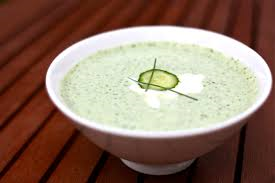
And, what to do with all those cucumbers exploding in the garden? The thought of cold cucumber soup brings myMEGusta to an outdoor café on Goetheplatz in Vienna, perfect for a hot day in a beautiful city. Recipes abound on the internet for purees made with raw cucumbers or cooked (myMEGusta’s recommendation). Try one of the cooked versions (pick an uncomplicated recipe), chill it down and taste. If you like it, blanch and freeze those cucumbers to pluck out of the freezer and make into a soup once the season is over.
Cucumber Soup

Cucumber Soup

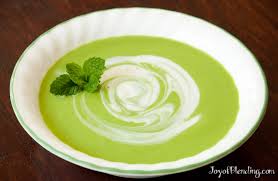
Pea Soup

Pea Soup

Fresh pea puree soup is a fabulous way to celebrate their very short season. But, try it with frozen peas, picked and processed at their sweet peak, and you’ll get almost as good a result at any time of the year, although finding the fresh mint accent will be harder in December.

Borscht

Borscht

Thoughts of December bring borscht to mind, but it is also excellent cold right now.

Then there’s the Spanish treat, Gazpacho, the delicious puree of dead ripe tomatoes and other summery flavors. Long time myMEGusta followers may remember “What’s the Difference Between Hot Gazpacho and Tomato Soup?” from August 2012 http://wp.me/p1VQOz-9f .

If you think about it, some of those “smoothies” coming out of the ubiquitous Vitamixes are not unlike cold soups, although calling it that is probably more decadent than some dieters want to admit to.

Celery For Breakfast?

Bloody Mary

Bloody Mary

No, not what you are thinking, although a lovely stalk of celery is a pretty Bloody Mary garnish, a traditional brunch treat which myMEGusta has not had in ages (being more of a Mimosa kind of girl).

Celeriac Pancake!

Celeriac Pancake!

We are remembering a trip to Vienna, and a delicious al fresco breakfast at Meieri am Stadtpark, the modestly priced appendage of the ** Steirereck am Stadtpark.  An outdoor table in the park setting was perfect for watching locals pass by on a cool July morning.  The dish was a celeriac pancake, garnished with slices of fresh radishes, edible flowers, and crème fraiche, exquisite and delicious.

Most Americans think of celery as the traditional stalk we enjoy crisp and raw, munched as a healthy snack (we dispute the notion that it has negative calories), chopped in a tuna salad or matched with peanut butter and raisins in the notorious Ants on a Log.

Celeriac, Grown for the Bulbous Root

Celeriac, Grown for the Bulbous Root

But, celery root, also known as celeriac, is much more popular in Europe, ubiquitous raw in zesty celeris remoulade, and served cooked as an important ingredient in dishes like those pancakes, pureed with mashed potatoes or in soup.

Celeris Remoulade

Celeris Remoulade

Peeling Celeriac

Peeling Celeriac


A recent treat was at Petrossian in New York, where a celeriac puree and celeriac chips accompanied striped bass and spinach, an excellent combination.

Celeriac Puerr and Chipe with Striped Pass and Spinach

Celeriac Puree and Chips with Striped Pass and Spinach

Readers who frequent Asian markets are familiar with Chinese celery, also known as kahn choy or chan choy.

Chinese Celery

Chinese Celery

Bearing a strong resemblance to stalk celery, this type is stringier and has a more pronounced flavor, which is why it is almost always chopped and cooked, or at least blanched.  When you see “celery” as an ingredient in authentic Asian cooking, it’s referring to this vegetable, although stalk celery can be substituted.

DIY Celery Growing

DIY Celery Growing

And, did you know that you can grow a new celery plant by immersing the base of the stalk in water, and letting it root? A more useful tip is that you can freshen limp stalks by putting them in a glass of cold water, even in the refrigerator, so that they can absorb the liquid and quickly crisp up.

Ants on a Log

Ants on a Log

Sweet Talk About Caramel

Caramel!

Caramel!

What’s not to like about it?

In its essence, caramel is nothing more than cooked sugar, delicious cooked sugar. When you “ brown” meats, or sear scallops, you are seeing caramelization, the same process and the same tasty result.

Caramel has enjoyed a surge in popularity in recent years. It has always been an ice cream sundae staple, but caramel  ice cream became a real hit when Haagen Daz introduced it to court the Latino population, not anticipating that it would become wildly successful throughout all market segments.

Dulce de Leche Ice Cream

Dulce de Leche Ice Cream

Available anywhere sugar is found, caramel is particularly important in the cuisines of Latin America, particularly in Argentina, where it is used from morning until night, from being drizzled on toast to being an important ingredient at dessert time.

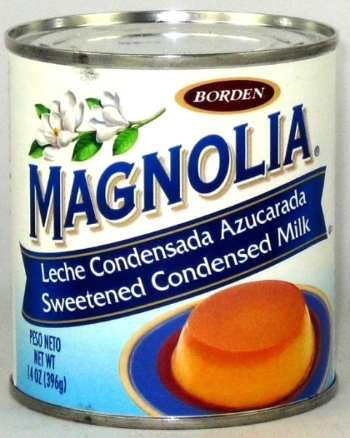
Dulce de Leche, as it is known in Spanish, is caramel sauce, made simply by slow cooking sweetened condensed milk. It’s easy to make at home, but so unnecessary when plenty of excellent jars are available at the supermarket.  http://www.eaglebrand.com/recipes/homemade-caramel-sauce-4002

Home made caramel

Home Made Caramel

Salted Caramel

Salted Caramel

The favorite in myMEGusta’s pantry is Smuckers Salted Caramel. They acquired the brand from Borden when that company was broken up several years ago. (The Elmer’s Glue went elsewhere.)

Another kind of caramel sauce, found in Latino markets for the most part, is cajeta, caramel sauce made of goats milk (not so easy to DIY).

A great use of caramelized sugar is in the Spanish/Latino flan, virtually identical to the French Creme Caramel.

Flan

Flan

Creme Caramel Renversee

Creme Caramel Renversee

Classically made, these desserts start with caramelized sugar (not sauce) which is poured into the bottom of a cooking dish, which is then filled with egg custard and baked, later inverted.

It is amusing that the manufacturers of caramel sauce (Nestle) and the sweetened condensed milks promote recipes that use their sauces in lieu of the simply caramelized sugar. And Kraft flogs recipes for flan that include their cream cheese brand.  We are sure that these are tasty dishes, but they’re just not very authentic.

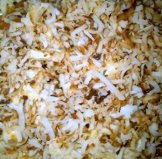
dulce de leche magnoliaIf you want a super easy, gluten free dessert for guests, or to bring to a party (and assemble in minutes once you get there), myMEGusta suggests simply cutting up some bananas, drizzling with caramel sauce, and sprinkling on toasted coconut (one or more layers, depending on quantity).

Bananas, Caramel, Toasted Coconut

Bananas, Caramel, Toasted Coconut

The Decade of the Bacon?

baconThere was a recent news item regarding the wild popularity of bacon on chic restaurant menus, quite ironic in these days of fear of nitrates, salt and fat.

But there’s no disputing it. This meat may be king right now, but myMEGusta would not call a bacon wrapped (3½ yards the ad screams!) fast food pepperoni/bacon pizza anything vaguely regal.

Bacon is simply a cut of pork belly which has been brined and cured, and is usually served crisply fried. Among the myths about bacon is that baking it will result in less fat (not fried, you know), and the occasional ‘tips’ about how to reduce shrinking. But, if the objective is to minimize fat content and optimize crispiness, you’re best off cooking in plenty of its own fat until achieving the desired color, drain/squeeze like crazy on paper towels to get rid of the fat, then serve immediately.

Canadian Bacon

Canadian Bacon

Canadian bacon is a different cut of cured pork entirely, made from the loin, and, of course, is prepared differently, more sautéed than fried, and an important ingredient in eggs Benedict.  It’s also the yummy meat used in the infamous “Bacon Butty” of Britain. For more on this, and other English treats, go to myMEGusta’s 2014 Fourth of July Special: A Salute to the Brits. http://wp.me/p1VQOz-k5

Chocolate Covered Bacon

Chocolate Covered Bacon

Then there’s the whole subject of chocolate covered bacon, which sounds like an abomination, but is really quite delicious when the chocolate is extremely dark and the best quality, and the bacon is crisp and salty. You can find more pictures in publications like Healthy Living and Low Carb Recipes. (We do not make this stuff up.)

A particularly delicious bacon dish can be found in the bier halls of Munich and elsewhere in Germany. Known as Krustenbraten, this is a roasted pork belly which has been roasted to exquisite crispness on the outside and then served in thick slices.

Krustenbraten

Krustenbraten

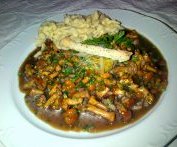
Chanterelles with Smoky Bacon and Spaetzle

Chanterelles with Smoky Bacon and Spaetzle

On another occasion, smoky bacon found its way into a delicious dish of chanterelles with spaetzle at the Hotel Landgasthof zum Adler in rural Baden-Wurttemberg, Germany, not overwhelmingly meaty, just enough to give a great flavors to the fresh mushrooms.

Italian pancetta, salt cured pork belly, is great to keep on hand in the freezer, and a little goes a long way adding a nice dimension to sauces and soups, as well as being a key ingredient in classics such as Bucatini-all-Amatriciana.

Pancetta

Pancetta

It is sometimes found in the packaged cold cut section, either sliced or diced, but more likely in the deli section, where you can order a thin slice, wrap well, and cut off little pieces as you need them. If thinly sliced, it can be fried like bacon to make a tasty, pretty garnish.bacon pancetta fried

Bucatini-all-amatriciana

Bucatini-all-amatriciana

When Table Wine’s NOT What’s on the Table!

Sometimes an unexpected beverage is better than the usual vino.


Cognac with Your Wonton Soup

Cognac with Your Wonton Soup

Cognac and Chinese Banquets

While wine and beer are often the felicitous accompaniments for Chinese food, a classic banquet beverage is Cognac, that elite grape distillate from France, and a status symbol around the world. The bottles sit right on the table, and the brandy is consumed straight. Kampai!


Guinness and Oysters!

Guinness and Oysters!

Guinness and Oysters

Wonderful seafood is to be found in Ireland, and myMEGusta’s favorite bivalve, the oyster, is there in force.  She was delighted to taste them in a new way, with a drop of stout in lieu of her usual squeeze of lemon.  You can try this anywhere, or just enjoy with your usual lemon wedge and a glass of Guinness to wash it down.


Foie Gras and Sauternes

Foie Gras and Sauternes

Foie Gras and Sauternes

Sipping wine with food is nothing new, but most folks don’t know that Sauternes, the rare, very sweet white from Bordeaux, is the classic accompaniment for foie gras, fattened goose or duck liver, which arrives as a cold terrine or as a perfectly seared slab. The wine’s slight acidity and elegant sweetness are the perfect foils for the intense flavors of the liver. The best in New York City is to be found at Le Perigord on East 52 Street (www.leperigord.com) and at Petrossian on 7th Ave/58 Street (www.petrossian.com) .

Calvados, Le Trou Normand

There was a time when formal banquets commonly went on for course after course, and not necessarily in the portions or sequence one might expect in a tasting menu at a place like The French Laundry today. They still exist, mostly in the world of gourmet societies, but one vestige of these feasts is what’s commonly called a “palate cleanser”, originally a tiny taste of something sprightly to wake up and prepare one’s taste buds for the next course.


Le Trou Normand

Le Trou Normand

The Trou Normand, or Norman Nail, was a favorite among French hosts, literally a small shot of the exquisite apple brandy from Normandy called Calvados, garnished with a spoonful of apple sorbet, a welcome treat amidst courses like fish in a cream sauce and rack of lamb. A variation is a tiny bite of sorbet, never excessively sweet, just a zippy taste, floating in a related spirit (for example, pear sorbet in Poire William Eau de Vie). Alas, the custom is no longer so necessary, now that dishes tend to be lighter (in richness and in size), but some pretentious places pass out little ice cream cones filled with commercial dessert sorbets between appetizers and main courses, a waste of calories and sorbet which could be a nice “extra” before the dessert arrives.


A Margarita for Conco de Mayo?

A Margarita for Cinco de Mayo?


Margaritas! Happy Cinco de Mayo!


Actually, this cocktail has become ubiquitous. It is wildly popular with Mexican food and is one of myMEGusta’s favorite exceptions to enjoying wine with a meal. That said, it doesn’t happen very often when dining out, only at the best Mexican restaurants where Margaritas are made the traditional way: lime juice, Triple Sec and Tequila, or some variant thereof, never using the vile sweet and sour mix which transforms a Margarita to a dull foo foo drink, particularly when extruded from a slushee machine.
Readers!  Any other unusual beverage pairings you can share?

Schnitzel and Music?

Is there somehow a connection?

Schnitzel!

Schnitzel!

Dining on delicious schnitzel in Austria or Germany, myMEGusta hardly thinks about Italian food or tunes.

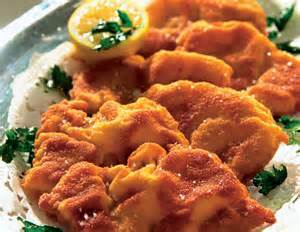
For example, a “must” in Vienna is a meal of wiener schnitzel, the Viennese version of this treat, best found at Plachutta, an upscale chain, her favorite unit being Gasthaus zur Opera, which claims to be “home “ of the “original”.  Ad hype aside, it’s simply delicious, a slice of pounded veal, encased in ethereally light breading and fried to a crisp, and feels like the taste of Vienna.

Check out their website to see how it’s done:

http://www.plachutta.at/de/recipes_wiener_schnitzel/

Bavarian Schnitzel

Bavarian Schnitzel

Moving along the Danube to Munich, myMEGusta recently enjoyed schnitzel again at Andy’s Krablergarten, a low key, cozy restaurant, where there is a whole schnitzel menu, with different meats (pork or turkey), different marinades and the choice or to-bread or not-to-bread.

That evening, her schnitzel choice was the Bayerischesschnitzel, the traditional style of Bavaria, wafer thin pork marinated in horseradish and sweet mustard, then encased in a crispy crust. The flavor combination was fantastic, savory and crunchy.

The word, schnitzel, evolved from the old German word for cut, “schniz”, with the diminutive “le” for “little”. “Wiener” simply means “Vienna”. (Why Wiener and Frankfurter refer to the same sausage, aka hot dog, is a subject for another day.)

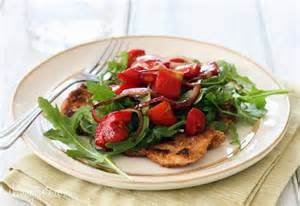
Chicken Milanese

Chicken Milanese

The concept of schnitzel preparation originated in Italy, where it’s called “milanesa”. Think of all the variations like veal (chicken, eggplant) parmesan, the fried fillet finished in a casserole with tomato sauce and cheeses, and the classic Veal Milanese (the same thing as a Wiener Schnitzel).

And here comes the connection with a well known tune, the Radetzky March, traditionally played by the Vienna Philharmonic during their New Years Day concert at the Musikvarein. This is the march during which the audience claps along.

This song by Johann Strauss, The Waltz King, is named for the famous 19th century Austrian Field Marshall Joseph Radetzky who was famous for his exploits in Italy.  It was this gentleman who brought the concept of “Milanese” veal to Vienna in 1857.  The dish became a craze, and took on a life of its own as the little cutlet from Vienna.

Radetzky March by Johann Strauss

Radetzky March by Johann Strauss

Postscript for travelers to Vienna: Hotel Pension Susanne, across the street from Plachutta Gasthaus zur Oper, is myMEGusta’s “perfectly adequate hotel” choice for accommodations when she’s not staying at a ritzier place on points. http://www.pension-suzanne.at/index.en.php

Bamboo – It’s not just for chopsticks and pandas!

Lunchtime At the Playground

Lunchtime At the Playground

There’s a lot of bamboo talk these days, about “sustainable” flooring and socks and shirts.

Life is good at the Panda Reserve in Chengdu!

Life is good at the Panda Reserve in Chengdu!

And, we panda lovers know that it’s what wild pandas eat, although zoos will supplement their diet with other things like high fiber biscuits and sweet potatoes.


For people, there are bamboo shoots and bamboo pith, the latter having little to do with the bamboo plant.

Bamboo shoots are a familiar ingredient in Chinese dishes, particularly things like Buddha’s Delight, that old fashioned mélange which vegetarians ate while everyone else dug into chicken chow mein. Unfortunately, most people are only familiar with the canned product, pretty pedestrian.

Fresh Bamboo Shoots

Fresh Bamboo Shoots

Fresh bamboo shoots are a different story entirely.

Bamboo Shoots

Bamboo Shoots


Crisp and tasty, they make a great addition to salads and stir fries, and are also delicious braised.They can occasionally be found fresh in supermarkets, either soaking in brined water or plastic, which are fine but it’s better to purchase at an Asian markets with better turnover.

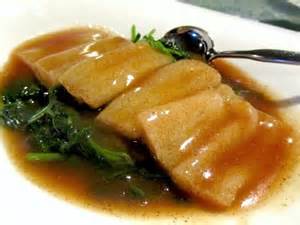
Braised Bamboo Shoots in Brown Sauce

Braised Bamboo Shoots in Brown Sauce

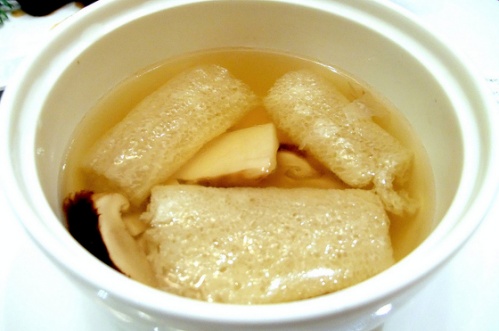
Bamboo Pith in Soup

Bamboo Pith in Soup

Bamboo pith, also known as bamboo mushroom or veiled angel or stinkhorn, is rarely seen in the United States other than at the most genuine and best Chinese restaurants. It actually looks like a tubular veil, the only part of the mushroom which is eaten, and has an almost nutty taste, usually served in soup or with other vegetables.

Bamboo Pith on the Hoof

Bamboo Pith on the Hoof


It is one of the items which myMEGusta cannot resist ordering on those rare occasions when it’s available, and it’s one of her favorite aspects of travel to China.

This vegetable has nothing to do with bamboo other than the fact that it grows on agricultural waste like bamboo leaves, among other things like soybean pods, and corn and willow leaves.

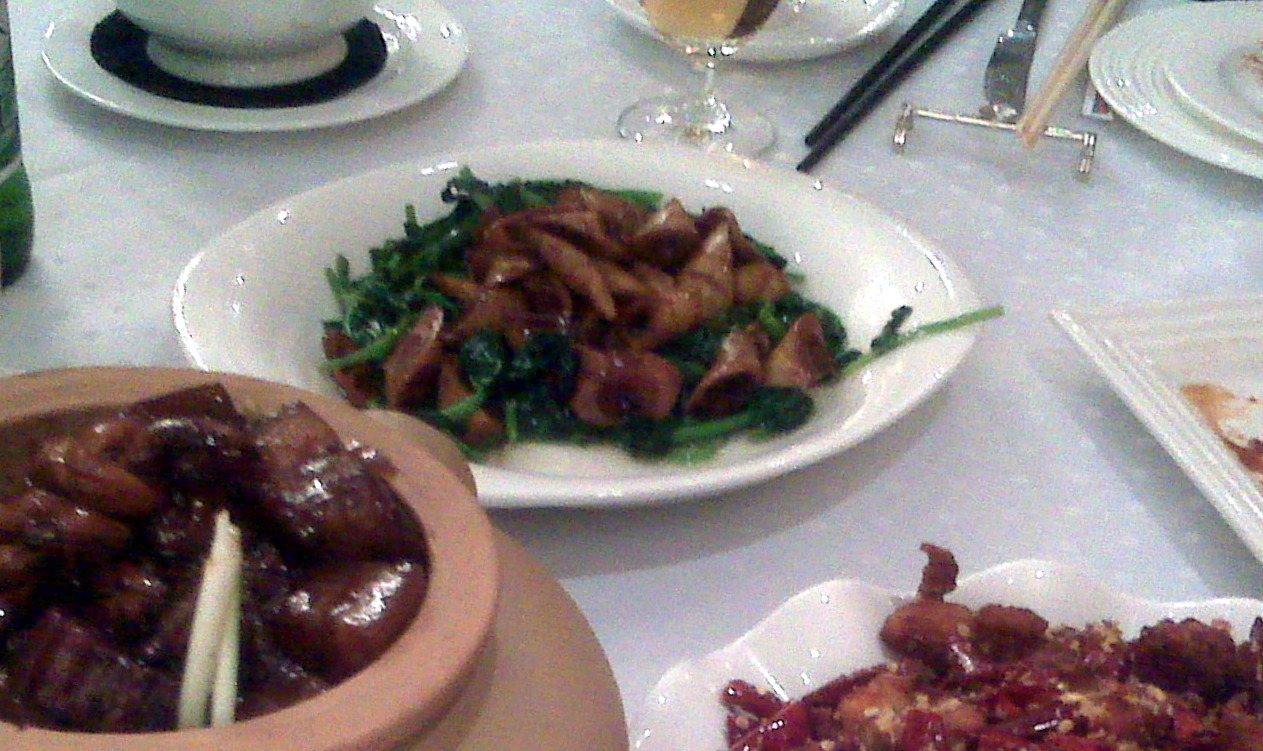
Bamboo Pith with Spinach

Bamboo Pith with Spinach

It used to be considered a delicacy, found only in the wild, and enjoyed in the most celebratory and exclusive banquet dishes. But, while it’s still pricey, bamboo pith has been cultivated in the Fujian province in China since 1979, making it commercially viable.  If you’re in China, you might find it fresh at a super-upscale restaurant, but it is usually sold dried.

Purchase it at Asian markets and on the internet, where it was recently seen for $31.30 for 8 ounces, expensive, but goes a long way once soaked and reconstituted. And it’s REALLY good!

“I am the Emperor, and I Want Dumplings”

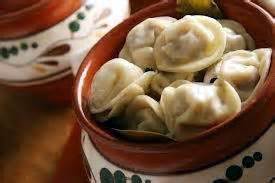
Eastern European Dumplings

Eastern European Dumplings

So said Ferdinand I, Emperor of the Holy Roman Empire in the 16th Century.

And, so does myMEGusta, and just about everyone else in the world.


There is an old Japanese proverb:  Luck is like having a rice dumpling fly into your mouth.

Dumplings range from ravioli to the doughy treats that come in chicken stews (“chicken and dumplings”), to Polish pierogi to Eastern European kreplach to Russian pelmeni to German knoedel to sadza, the national dish of Zimbabwe. If you think about it, empanadas, those Latin American treats, are also a variation on the dough covered treat theme. Then there is the whole category of dessert dumplings.

But today, we are in the mood to travel to the Far East and contemplate the delicious stuffed noodle skins that are the heart of dim sum brunches. Many of us got introduced to the concept through the ubiquitous won ton soup of our youth (when chicken chow mein was considered “normal” Chinese food).

Pork Soup Dumplings

Pork Soup Dumplings

Poor Old Ferdinand probably never enjoyed an Asian dumpling.

Chinese Vinegar and Ginger

Chinese Vinegar and Ginger

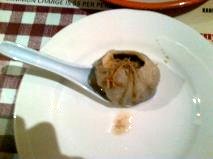
Pork Soup Dumplings

Pork Soup Dumplings

He never got to savor a pork soup dumpling, made by stuffing the noodle with jelled or frozen broth and a little meat, so luscious that they are eaten from a spoon to catch the steamy juices as they spurt out when you bite in.  Hint:  Put on a few drops of Chinese vinegar/ginger for an extra tasty treat.

His chefs never made classic Chinese Jao-Tse, aka Pot Stickers, the deceptively simple pork dumplings which can range from the humdrum to heavenly, depending on the care with which chef chooses quality ingredients.  Ambitious readers should consult Eileen Yin-Fei Lo’s excellent Mastering the Art of Chinese Cooking (Chronicle Books) for step-by-step directions which worked fabulously in myMEGusta’s kitchen.

Making Pot Stickers

Making Pot Stickers

This type dumpling can be steamed or deep fried, but the tastiest results come from steam frying. A little complicated, this involves cooking the dumplings in a mixture of oil and water, allowing the latter to evaporate as the steaming is completed, and letting the cooked dumplings crisp up in the remaining oil.

Gyoza, a familiar appetizer in stateside Japanese restaurants, are a close relative.

Pot Stickers

Pot Stickers

Another standard which can be either just OK or heavenly is the Har Gow, the essence of simplicity depending totally on the freshness of the shrimp and delicacy of the seasonings.

Xian, China, famous for the terra cotta warriors, is also considered the dumpling capital of China, particularly due to one restaurant where all tourists “must” dine because they, supposedly, have the greatest variety in the world. Unfortunately, most of them sampled by myMEGusta were just gimmicky (fancy shapes and food colors), doughy and not particularly interesting to eat.

What a shame to have wasted a meal on mediocrity with the vast array of wonderful dumplings out there!

Szechuan Dumplings

Szechuan Dumplings

For really light steamed dumplings in a spicy sauce, seek out Szechuan places, particularly in cities like New York where authenticity rules. These cuties in a spicy red oil sauce are one of myMEGusta’s favorite appetizers in the world to share at the start of a feast.

Post Navigation