myMEGusta

Named for things that please me (“me gusta” in Spanish) and rhymes with balabusta (Yiddish for “good homemaker”).

Crying for the Blues!

Blue Corn Tortilla Chips!

Blue Corn Tortilla Chips!

One of the first foods to be banished from my home, and it stays in perdition, was blue corn tortilla chips.

Because they are funny looking? Or taste bad?

Au contraire, because they are one of the most irresistible foods in the universe, and the bag would be gone within hours, even if it were intended for guests.

But, other forms of this wonderful crop are more than welcome, and  myMEGusta loves to indulge in blue corn delicacies and seeks them out wherever she finds them.  (Is it true that a blue corn chip eaten in someone else’s house has no calories or fat?)

Touted as being healthier than regular corn, with wise dissenters pointing out that there are much more efficient ways than carb loading to get an insignificantly higher level of vitamins and protein, blue corn is just plain delicious.

Blue Corn Tortillas
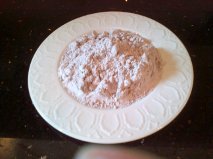
Blue Corn Tortillas

Blue Cornmeal

Blue Cornmeal

Blue corn meal can be substituted for regular masa in Latino/Southwestern preparations, but handles differently and can be challenging (but not impossible) when making tortillas (mixing in some regular flour or cornmeal helps).
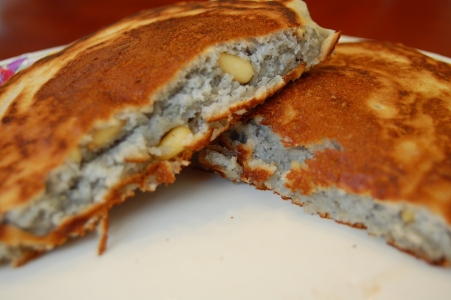
Blue Cornmeal Pancakes with Pinola Nuts

Blue Cornmeal Pancakes with Pinola Nuts

A visit to Santa Fe is not complete without a breakfast or two of blue corn pancakes, most recently tracked down at the coffee shop on the main square (there’s only one, you cannot miss it).

Fresh blue corn is available in farmers markets in Peru, as evidenced on a recent visit to Cuzco, Peru.

Fresh Blue Corn

Fresh Blue Corn

It showed up as a sorbet, both at an otherwise non-descript airport hotel and as a garnish to a passion fruit tart at one of Lima’s top restaurants.
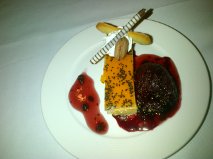
Passion Fruit Tart with Blue Corn Sorbet

Passion Fruit Tart with Blue Corn Sorbet

Blue Corn Sorbet

Blue Corn Sorbet

Want a taste of something sweet made from blue corn?
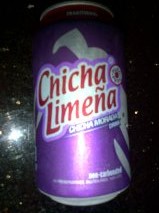
Blue Maize Soda

Blue Maize Soda

Don’t hop a plane, simply locate the Peruvian section in your local Latino market and look for a can of Blue Maize soda!
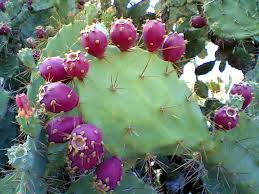
A Succulent Succulent

prickly pear

The tour guide in Sardinia was so proud of the beautiful landscape, pointing out the numerous Italian cacti with their little pink bumps, clearly believing them to be natives (like herself) and a part of the terrain from time immemorial.

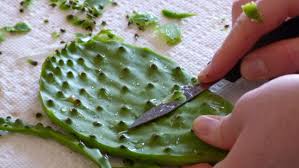
When myMEGusta looked at these plants, yes, she saw how pretty. But her thoughts immediately went to delicious prickly pears. And, nopales, the subtly flavored vegetable which emerges from the painstakingly peeled and processed cactus itself.

Native to the Americas, cactus plants of all shapes and sizes grow prolifically in the western and southwestern United States, and throughout Central and South America, where they are enjoyed as a source of food as well as beauty. Like many other plants, they were carried to Europe and all points beyond, and, when in a favorable climate, grow like weeds, to the point of being considered invasive in some areas.

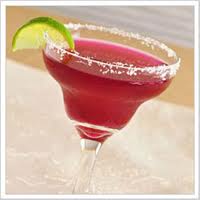
Prickly Pear Margarita

Prickly Pear Margarita

Nopale Salad

Nopale Salad

But today we’re talking about the fun part of one particular type  of cactus, the part that appears  at lunch! And dinner! Depending on where you live, prickly pears may be relatively easy to find.

Don't try this at home!

Don’t try this at home!

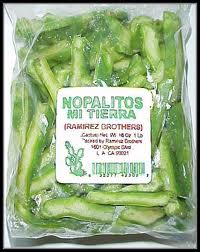
Less so is the cactus leaf, the source of the nopales, either as a hunk of cactus or already prepped, perhaps at the supermarket, and certainly at Latino supermercados, either in the produce section or in a jar.

Prepared Nopales

Prepared Nopales

But I would not suggest either with liver, thank you.

Cactus Nite at the Mess Hall

Cactus Nite at the Mess Hall

Chanterelles! Pfifferlingen! Girolles!

It’s time!

These golden jewels are popping up in woodsy areas in the Pacific Northwest, in Minnesota, in Europe, really anywhere relatively north, and smart foragers are snapping them up, some to land in their own sauté pans, and some to go to market.

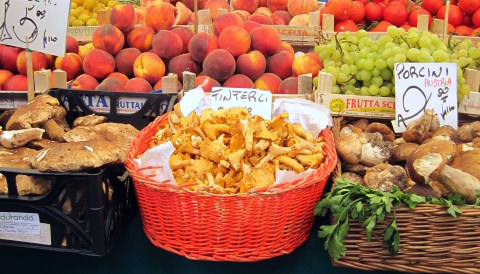
Chanterelles at the Rialto Market, Venice, Italy

Chanterelles at the Rialto Market, Venice, Italy

Chanterelle mushrooms (aka girolles in French and pfifferlingen in German) are considered to be among the “foolproof” wild mushrooms. None of the dangerous ones look remotely like them, and “false chanterelles” (barely edible and not worth the trouble) are a different color configuration.

They are also considered to be among the most choice: tender but firm in texture and with a unique flavor which is enhanced with a little heat so they are best just barely cooked.

Most chanterelle seekers will do best to check out farmers markets or upscale grocery stores, albeit not the cheapest way to find them, but the most reliable if you don’t know where to look.

Discovering Gold!

Discovering Gold!

MyMEGusta had the pleasure of harvesting these little beauties near Duluth, MN, a few years ago at a location she won’t divulge (thus respecting the mushroom hunters’ code of silence).

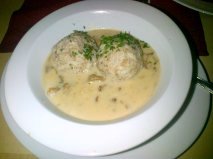
Pfifferlingen in Herbed Cream with Semolina Dumplings

Pfifferlingen in Herbed Cream with Semolina Dumplings

European food lovers are very fortunate in that the custom of focusing on seasonally special items is alive and well. Chefs’ creations run the gamut from traditional favorites (e.g. a hefty portion of pfifferlingen served with herbed cream and semolina dumplings recently at the Ratskeller in Regensburg, Germany) to more exotic offerings in three star restaurants.

I fondly remember my first encounter with this intense focus on seasonality at lunch time in Munich, Germany in the 80’s, happily working my way through a plate of pfifferlingen in cream. And, on another trip, another time but in France, “salade tiede” (warm salad) which was mounds of barely cooked, lightly seasoned chanterelles on a bed of lettuce.

Tete de Moin Cheese

Tete de Moinr Cheese

These mushrooms are so beloved in Europe that their name has been borrowed for a little mechanism used to shave Tete de Moine (monk’s head) cheese in Switzerland, because the cheese then resembles them.

The Red Peril

Sometimes the things you come to love the best are things you used to hate.

My introduction to paprika was the flavorless sort that cafeteria ladies dumped on smelly fish, presumably to get it to look appetizing if you could get past the odor.

My latest taste of paprika on fish was pure delight: Dorade fresh from the Mediterranean cooked gently in garlic studded Spanish olive oil and sprinkled with spicy hot paprika. Simple, elemental, delicious. The fact that it was consumed at an excellent seaside restaurant in Mallorca (right behind us, a table of people who appeared to be the crew of one of the King’s Cup Regatta ships) didn’t hurt.

Dorade

Dorade

The irony of this dish is that it really wasn’t pretty at all. In fact, the sprinkles of paprika actually made it look quite messy, and unappealing, but that really didn’t matter after the first bite.

Paprika Stand at the Budapest Market

Great Market Hall in Budapest

An import to the Old World from Latin America, dried red peppers are closely associated with the great cuisines of Central Europe.  None of the paprikash dishes we identify with Hungarian cooking existed before the capsicums were introduced by Spanish and other explorers/plunderers, and it took a while for these plants to be shared throughout Europe and for locals, such as the Hungarians, to learn how well they grew in their farms, and what a fantastic flavor source they were when ripened, dried, and ground.

An extraordinary array of paprika products can be found at the Great Market Hall of Budapest where you could believe that you took a wrong turn and landed in Santa Fe when you see the hanging “ristras” of dried chilis.

The paprika in lots of home kitchens should probably be relegated to the recycling bin, as most people stock only the bland type which gets stale when emancipated from the spice rack only on rare occasions when a little color is needed.

THIS is paprika!
THIS is paprika!
Better to seek out the real Hungarian paprika, now available in most supermarkets, and certainly via Penzey’s and other good spice merchants.

Strong Steven is one of myMEGusta’s favorite condiments, discovered on café tables in Budapest the same way ketchup bottles are fixtures in the US, and impossible to find other than from Judi’s Univer Store (www.judisuniverstore.com) , a Hungarian food specialty mail order house.

Paprika Condiment

Paprika Condiment

Smear it on a piece of fish, sprinkle on some panko and bake just until the fish is done for a super delicious, super simple main course. They also make a milder version for the faint of heart.

Mellow Yellow Potato: All For a Good Causa

Those Peruvian natives, potatoes, are among myMEGusta’s favorite foods, perhaps because of my Irish heritage, or because I just love these starchy tubers.

Yellow Potatoes

Yellow Potatoes

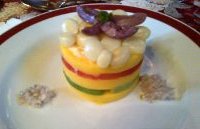
My most recent potato extravaganza was in Peru, where hundreds of varieties are grown, including nubby, funny shaped ones in various hues. Yellow ones are particularly popular, especially as an ingredient in causas, a kind of potato cake.

Astrid y Gaston Causas

Astrid y Gaston Causas

My first encounter with a causa was at Astrid y Gaston, one of Lima’s finest restaurants. It was a little risky (or crazy) to order such a simple dish at this temple of gastronomy, but the idea was intriguing. The caption on my cell phone photo reads “potato sushi”, since that’s exactly what they looked like, and I speculated that this dish might be some kind of fusion of Peruvian potatoes, the national staple, and the influence of Japanese immigrants.

Wrong!

Causas appear all over Peru. They are made with an infinite variety of fillings and toppings, and can be little, like the bite sized ones I first encountered, to a few inches in diameter to large (or small) rolls to pie size.

Casa Aliaga Causa

Casa Aliaga Causa

They can be found at the most upscale restaurants, and at the simplest tables, how the cake is shaped and the kind of garnish being the differentiating factors. Tomato and avocado are the most common garnishes I saw, both in Lima and in the Andes, but just about anything goes.

Pesdacos Capitales Causas

Pescados Capitales Causa

The common element is the yellow potato mixture created by mashing with seasonings like ground aji peppers (hot and yellow), lemon and mayonnaise, maybe a dash of mustard. The vibrant yellow potatoes which are always used in real causas are not available in the United States, but they are commonplace in Peru’s markets, and some stands even sell peeled, shredded potatoes ready to cook and mash.

Regardless of the potato fakery, causas are within our capacity stateside, and they’re actually fun to make, and tasty, even if not so authentic!

Copnnecticut Causas

Connecticut Causas

Crazy for Mozzarella

Who among us who grew up in the US in the 50s, perhaps other than Italians would believe this? Mozzarella cheese was a dry, rubbery glob that came wrapped in plastic from the supermarket. You’d never eat it straight, although it was delicious on pizza or in lasagna.  Who would bother obsessing over this stuff, other than the lucky ones tuned into Italian delis?

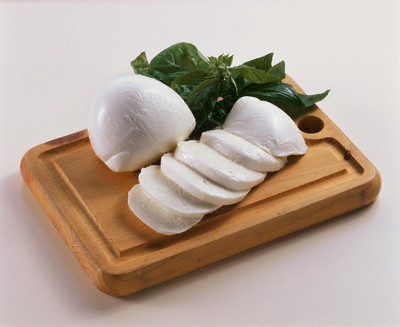
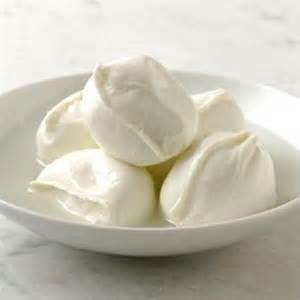
Fresh Mozzerella

Fresh Mozzerella

The tides started to turn when some of the manufacturers started marketing little mozzarella balls packaged in water, using the traditional Italian name, fiore di latte, and really not bad.

But today, wonderful, real, fresh mozzarella is showing up more and more, from upscale grocery stores to delis (and not just the Italian ones), and restaurants.

Stamford, CT, denizens know that the best fresh traditional mozzarella comes from Fratelli Market (http://www.fratellimarketct.com/ ) where they make it continuously all day. It is even better than you can get on Arthur Avenue in the Bronx, where NY State law mandates that they use a manufactured base instead of fresh milk. I had the pleasure of attending a mozzarella making/tasting demo at one of the leading delis there a while back, and while delicious, it did not hold a candle to Fratelli’s.

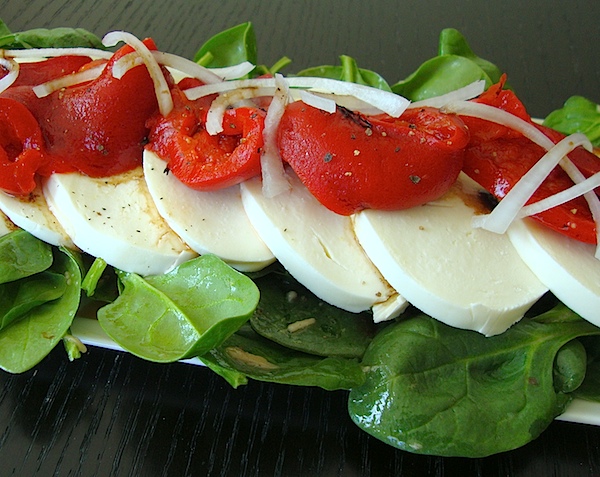
Roasted Peppers and Mozzerella

Roasted Peppers and Mozzerella

There is nothing more ethereal than a slice of really good mozzarella garnished simply with good olive oil, sea salt, and roasted red peppers, or, lusciously ripe heirloom tomatoes in the summer.

And, then there’s buffalo mozzarella (mozzarella di bufala), wetter/creamier with a very unique texture. This is the fresh mozzarella that is the most popular and widespread in Europe, and only recently has become accessible and affordable here.

Mozzerella di Bufola

Mozzerella di Bufola

No, we’re not talking about buffalos as in “home, home, on the range”, which are actually bison. Rather, these are domesticated water buffalo, which originated in Asia and were brought to Europe in the middle ages.  And this is why buffalo mozzarella is imported.

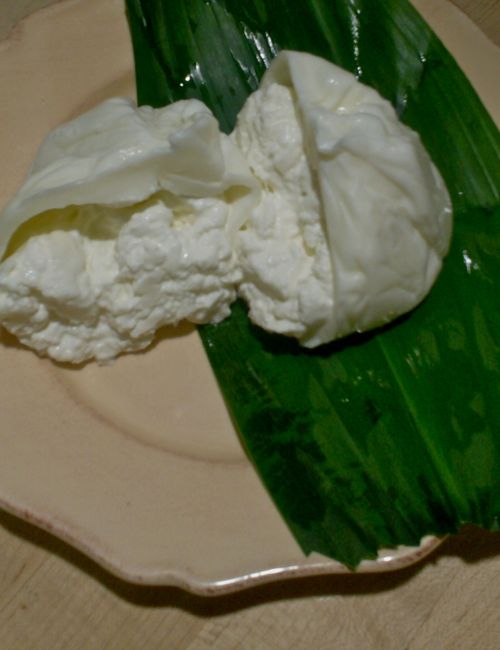
Burata is the latest mozzarella to sweep into modern cuisine. Made from a combination of cream and mozzarella, wrapped in a thin layer of regular mozzarella to hold it in place, it is exceptionally rich with the cream giving a hint of sweetness.

Burata Mozzerella

Burata Mozzerella

Some restaurants now have whole sections of their menus dedicated to mozzarella. One favorite, Bar Sugo in Norwalk, CT (www.barsugo.com) offers different styles of mozzarella with special garnishes, e.g.  mozzarella di bufala with fig jam and home-made mozzarella with truffle honey, all with cured meats and marinated vegetables. Molto Mozzerella and Wine bar in Fairfield, CT (www.pizzeriamolto.com) serves their several types with olives, roasted peppers and prosciutto and also makes an extraordinary burata pizza.

MyMEGusta refers to foods like this as “worth the fat, worth the calories.”

Guest Blogger Gregg Mineo: PASSIONATE ABOUT PASTA

MyMEGusta welcomes Gregg Mineo, of at Beviamo Hand-Made Pasta in Camden, Maine!

Cooking at Casa Pietraia

IMG_0318Having trained and worked as a pasta maker for over two years, and having cut my teeth on the art of pasta making as a disciple at my mother’s and grandmother’s side, I was of course eagerly anticipating our two week tour of the hand-made pasta mecca: Italy, more specifically Val d’Elsa, which means Hill of the Elsa Valley, located in the Region of Tuscany, near Siena.  The highlight of our trip was my much anticipated day of cooking and pasta making with one of the masters: Emma Montovani.

Emma and her husband Giovanni own and manage a wonderful farmhouse in the heart of Chianti, in one of the most beautiful corners of Tuscany.  This colonica style farmhouse – a square of structures surrounding a courtyard – has been fully restored, and is home to their inn and cooking school, and an olive tree farm.  My focus was our day together, shopping for lunch, preparing, cooking and of course making hand-made pasta.

Casa Pietraia is tucked away on top of a hill, high atop Val d’Elsa, and after a 30 minute drive up winding roads, we arrived at Emma’s home, in the late morning.  We got busy very quickly.  After laying out our food finds from earlier, we planned our menu:

Couscous Terrine with Local Sardines

Hand-Made Chestnut Flour Ravioli with Pecorino Sauce

Black Sea Bass with Citrus and Olives

Castagnaccio (Dessert)

IMG_0307

The pace was purposeful and time sensitive, since we were preparing a lunch for Emma, Giovanni, their son, and my wife, and we had to cook, plate, serve and eat in only a couple of hours.  Well, that didn’t happen. This glorious visit turned into an all day affair. We started with local cheeses to nibble on, some young red wine from the nearby area, and of course the unbelievable Tuscan bread.

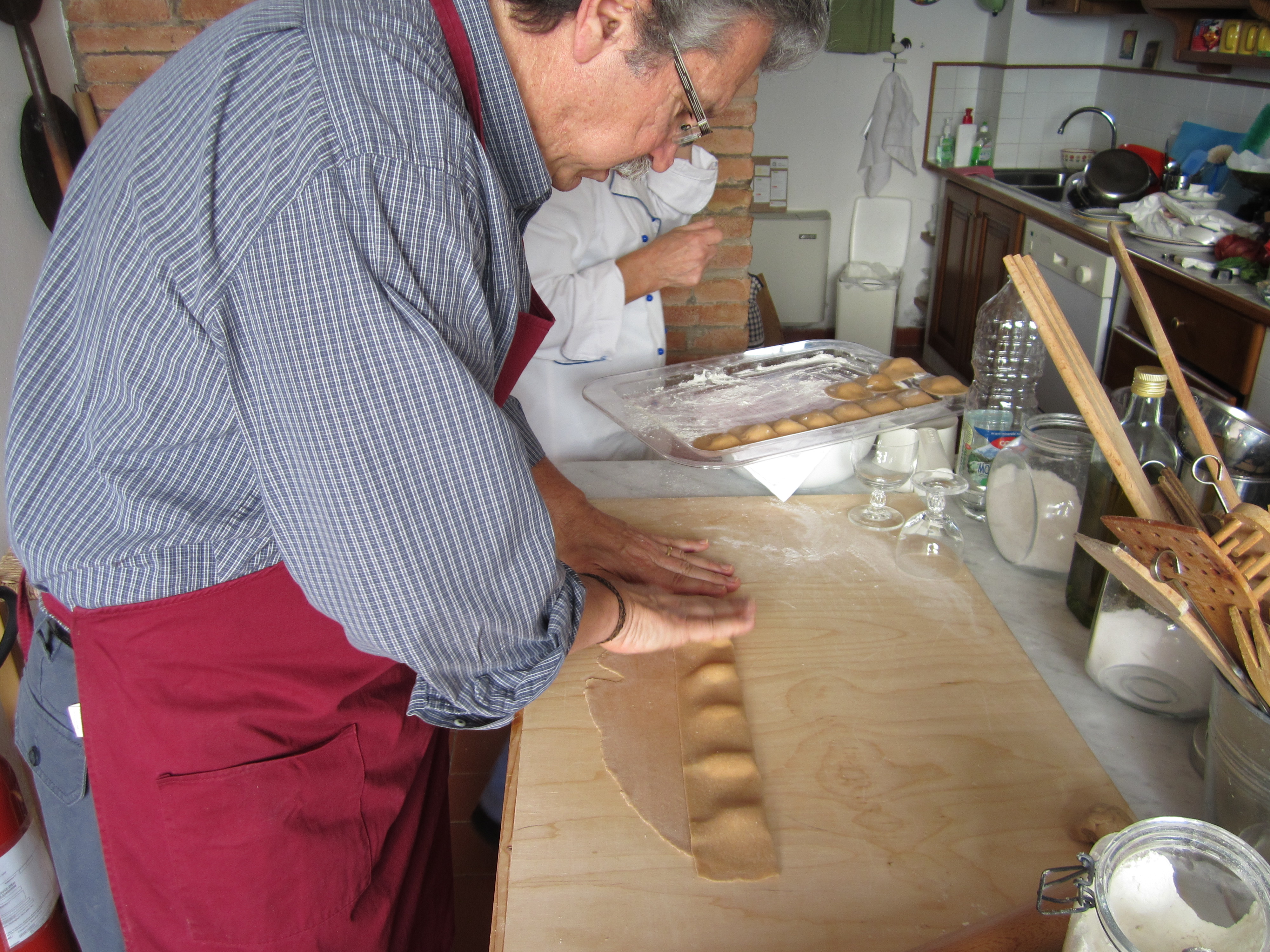
Rather than cover all aspects of our menu, I want to focus on the process of pasta making.  This was authentic and traditional, the way I was taught by my family, starting with making the pasta dough (actually this is redundant, since pasta means any type of dough in Italy), with fresh local eggs, “tipo 00” (an especially fine Italian flour) and chestnut flours and a dribble of olive oil, mixed and kneaded on a board. IMG_0310

Then we rolled the dough out, only using a wooden dowel, and Emma insisted we not stop until it was the thickness of a bed sheet.

We hand cut the sheets for the ravioli, and filled them with fresh ricotta and parmesan cheeses.IMG_0316

The sauce was as simple as possible, but isn’t that the hallmark of all Italian cooking?  We chopped walnuts, rosemary leaves, and mixed with pecorino cheese (of course, indigenous to the area), and after adding a few tablespoons of olive oil and some of the pasta water, it was finished with freshly ground black pepper, and poured over the cooked ravioli.

Along with the couscous and sardines dish (truly unique), the unbelievably fresh black sea bass simply roasted in the oven with citrus and olives, and the castagnaccio, a local dessert made with chestnuts, the chestnut flour ravioli (which I have made since back home) will remain one of the truly great pasta dishes I have ever sampled.

This remarkable day with Emma and her family started out as a cooking class, but ended up being one of the best food experiences of my life, one I will never forget.  I am happy to forward the recipes and information on Casa Pietraia to those interested. Just leave your request as a Comment, and myMEGusta will forward it to me.

Chocolate Mini Guinness?

Yes. And myMEGusta was a little scared by this dessert description until it arrived: a deep, dark chocolate pudding topped with perfect whipped cream, looking just like a glass of Ireland’s favorite brew.

Mini Chocolate Guinness

Mini Chocolate Guinness

Absolutely delicious.

The setting was a tasting of recipes from Clodagh’s Kitchen Diaries, by Irish chef and television personality Clodagh McKenna, in celebration of St. Patrick’s Day.  It was a veritable taste of Ireland, with a spotlight on their Slow Food movement, and a celebration of their wonderful cheeses, Farmhouse Cashel Blue my favorite. Another highlight was her Farmhouse Pate, a melange of very flavorful pork and Kerrygold butter.

But, back to Guinness, the iconic St. Patrick’s Day beverage, thanks largely to its own promotions around the holiday.

My favorite Guinness experience occurred just north of the border.

Guinness and the Antarctic Scientists

Guinness and the Antarctic Scientists

Not THAT border! Just a few degrees north of the Antarctic Circle.

The Lindblad Endeavor made a stop at the Palmer Research Station in icy Antarctica. In reciprocity for letting us passengers tour the facility, the scientists were invited on board for a party including their favorite libation, draft Guinness.

A Penguin or a Guinness?

A Penguin or a Guinness?

And doesn’t the penguin look a little like a Guinness, too?

UNIque Porcupines of the Sea?

Sea urchins are lovely little beasts, spiny on the outside and sweet, soft and delicious on the inside.

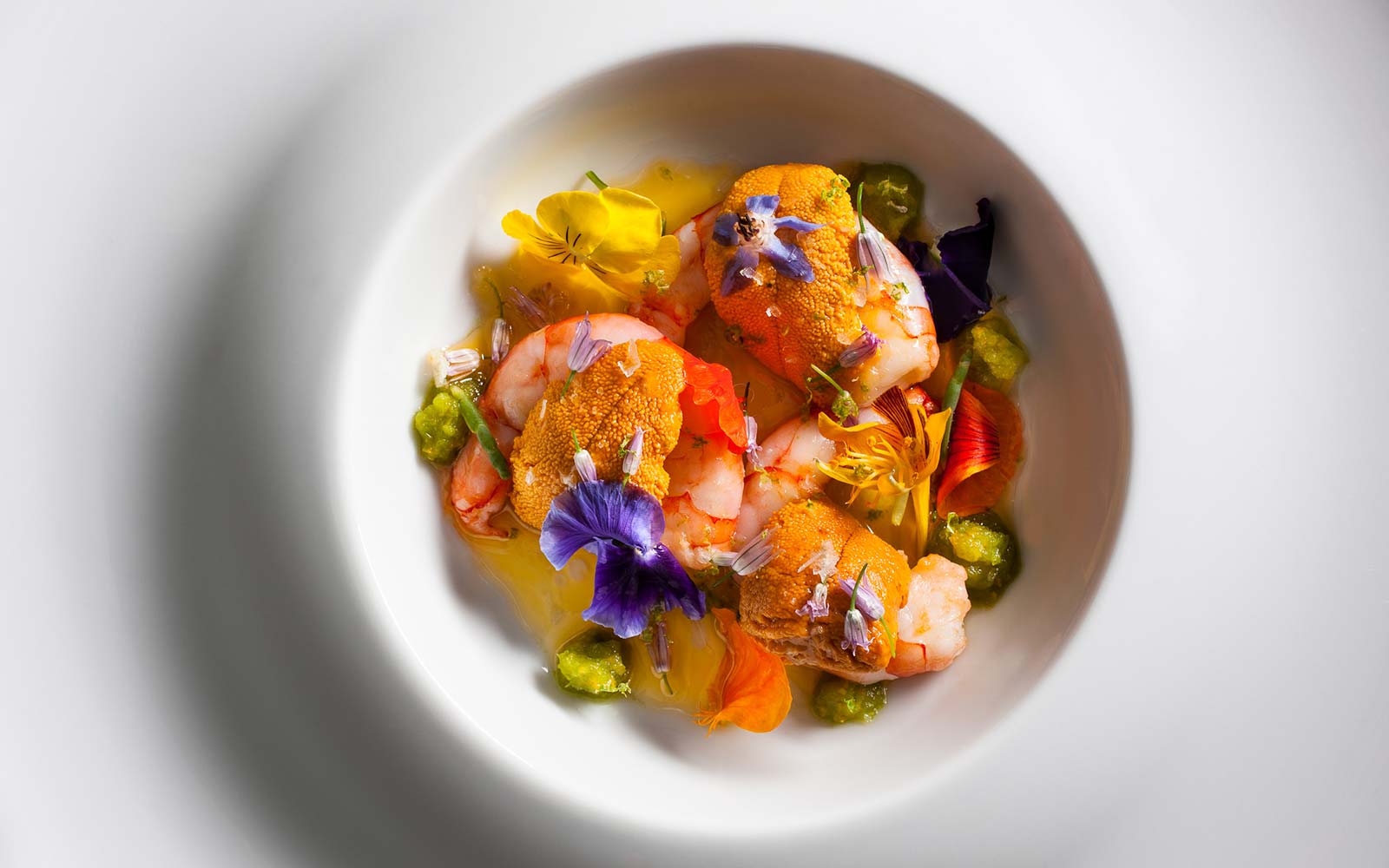
Uni with Maine Ruby Shrimp, Green Chili and Lime

Uni with Maine Ruby Shrimp, Green Chili and Lime

Most Americans know them as uni, the yellow/orange roe of the sea urchin we love on sushi rice, or which some enterprising chefs are starting to make into preparations like Jean-George Vongerichten’s uni with jalapeno on pumpernickel toast, or with Maine ruby shrimp with green chili and lime.

My first encounter with them was in France, as a component of a plateau de fruits de mer (platter of shellfish), freshly opened and cleaned, with the edible part salty and sweet at the same time, also known in French as chataigne de mer, or chestnut of the sea.

Plateau de Fruits de Mer

Plateau de Fruits de Mer

My most recent, and one of the most delicious, encounters with uni was at Sushi Oto in San Diego, described by a friend as “better sushi than I get in Tokyo.” It was there that I was introduced to San Diego uni, reputed to be the best in America, and served up in several delicious, tiny dishes.

Sashimi at Sushi Oto

Sashimi at Sushi Oto

One reason for this, in addition to the extraordinary quality of the other ingredients and the chef’s talent, was freshness.  Most of the uni served in the United States has been frozen, wonderful, to be sure, and a delicacy I order often. But the taste and texture of fresh uni is unmatchable, firmer yet creamy, cleaner tasting.

Fresh San Diego Uni

Fresh San Diego Uni

This 3+ minute video tells the story of where uni comes from, and how it moves from sea floor to shipment to the really good restaurants, Asian markets and a few seafood stores:

http://www.youtube.com/watch?v=9quTCZe7wag

Whole sea urchins sometimes can be found in fish markets, more so in France than in the US. And, if you are charmed by their handsome appearance, but don’t want to eat it, get one as a pet!

http://www.thatpetplace.com/Echinometra-mathaei-common-rock-urchin-208600

Hot Tamale Holiday

The best holidays are also celebrations of wonderful food.

These are often religious holidays, such as Epiphany, when a special cake is celebrated. Called the king’s cake in New Orleans, or galette in France, or rosca de reyes in Latin America, each cake hides a small token – perhaps a plastic or ceramic baby – and some are also decorated with a crown (tying to the Three Magi, and to what you’ll need if you bite into the ceramic baby). Whoever gets the piece with the token, is “king” and royalty comes with privileges and obligations.

Mexican Rosca de Reyes

Mexican Rosca de Reyes

If you are in Mexico, that means that you host a tamale party for your family and friends on February 2, Dia de la Candelaria, also known as Candlemas, another great day for eating. The beverage of choice is atole, a thick, sweet drink made of masa (a special kind of ground corn) and various flavorings.

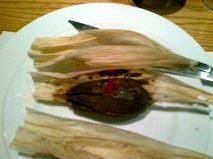
Tamales

Tamales

This year, myMEGusta was fortunate to be in Tijuana, Mexico on this delicious holiday, and treated to breakfast at the beautiful Culinary Art School  (http://www.culinaryartschool.com.mx ).

It was a tamale feast (“Festa Tamal” in Spanish)! And my eyes opened wide to the possibilities of tamales.

First came three savory flavors: Mole, Greens and Mushrooms with Epazote (a zesty herb), and Canarios.

Most fascinating was the Canarios – so named for their golden yellow hue which comes from liberal use of egg yolks, not from food coloring or little yellow birds.

Mole and Canario Tamales

Mole and Canario Tamales

The most exotic, to my naïve taste buds, was the Chocolate Raspberry tamale for dessert. This delicacy had a flavor reminiscent of a brownie, but with the unmistakable texture of a fluffy tamale. A raspberry added just the right sweet/tart flavor counterpoint.

Chocolate Tamale

Chocolate Tamale

For the uninitiated, tamales are a high calorie, labor intensive treat, and well worth it on both counts, easy to make, but hard to make well. Described simply, lard is beaten into corn masa, which is then smeared onto dried corn husks, usually garnished with other ingredients like those mentioned above, or perhaps just chili or cheese, then rolled, tied and steamed.

Getting the right texture, light and not greasy, is the trick.

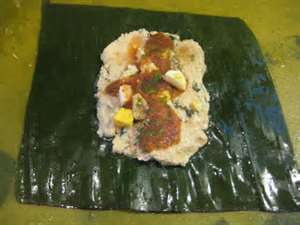
Making a Banana Leaf Tamale

Making a Banana Leaf Tamale

There are as many variations on tamales as there are ingredients and creative Mexican cooks. In some regions, such as the Yucatan, they use banana leaves rather than corn husks.

Tamale Machine

Tamale Machine

You can even buy a tamale machine.

I cannot wait for my next trip to Playa del Carmen to try some from the opposite end of the country!

Post Navigation