myMEGusta

Named for things that please me (“me gusta” in Spanish) and rhymes with balabusta (Yiddish for “good homemaker”).

Charcuterie, When a Deli’s Not Just a Deli

Every culture has its take-out, whether it’s the bread lady at the pueblo or the source of the best authentic Kosher pastrami in New York City or the ever expanding prepared foods selections at Whole Foods.

Charcuterie

Charcuterie

But, the French have this category nailed, and it’s been that way since the end of the Revolution, when the beheaded aristocrats’ cooks needed a new way to make a living. Some of them engaged in “restauration”, the root of the word “restaurant” where someone cooks and we eat there, and the “charcutiers”, or “cooked meat” specialists who sold their wares to a hungry public to enjoy at home.

The nooks where the original charcutiers worked quickly grew to shops known as charcuteries, and they are a formidable Gallic institution.

Charcuterie Plate

Charcuterie Plate

When we think of charcuterie, we tend to think of the sausages and smoked meats which are familiar as charcuterie platters, often marketed as shared first courses in restaurants.  But there is so much more!

Among the obvious  are the sausages which are cooked, and just have to be reheated. These are the myriad shapes and sizes which make an Alsatian choucroute (sauerkraut) garni such a special treat, as well as the boudin blanc (white sausages, usually of veal or chicken) and boudin rouge (blood sausage).

Charcuterie Traiteur

Charcuterie Traiteur

Then there are the raw sausages, which used to be limited to the shops named Charcuterie/Traiteur or Charcuterie/Boucherie, but are now more ubiquitous.

Pied de Cochon, a Delicious Breaded Pig's Foot

Pied de Cochon, a Delicious Breaded Pig’s Foot

Some delicious French dishes are almost never made at home, particularly in these days of two earner families and no “madame” to watch a pot all day. So, while we American gourmands struggle to perfect our tripe a la mode de Caen (beef tripe, Caen style), our cassoulet (the famous bean/duck/sausage casserole), and our pieds de cochon panes (breaded pigs’ feet), the French cook simply stops by the charcuterie on the way home from l’office and reheats.

One huge change in charcuteries over the years is that highly decorated dishes (of dubious freshness and flavor) used to fill the windows, with a few spare sausages to fill in the holes. While not extinct, these items are decidedly out of fashion. Still sold in the good charcuteries but with less variety and certainly less cooler space, they are like edible show pieces.
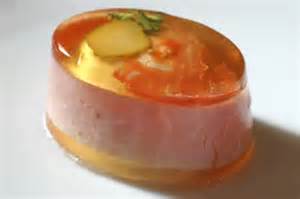
Egg in Aspic with Garnishes

Egg in Aspic

Take, for example, oeufs en gelee (eggs encased in aspic with various designs/garnishes).  A non-favorite of MyMEGusta, these are perfectly poached eggs, and the gelatin is never sweet, but often flavored with port or other elegant accoutrements, not to mention painstaking decorations.  No offense to the aspic, we just don’t like eggs, and, as the old joke goes, “Take my egg in aspic. PLEASE take my egg in aspic”.

If you want to see why this is not something the average French homemaker creates from scratch, check out this somewhat simplified recipe from Saveur Magazine.

http://www.saveur.com/article/Recipes/Eggs-in-Aspic-Oeufs-en-Gelee

Other foods are encased in the gelatin and decorated, destined for fancy hors d’oeuvres, and no French person thinks for one second that their host/hostess had anything to do with this offering other than paying an arm and a leg at the charcuterie.
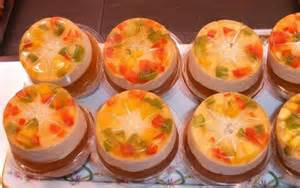
Tuna in Aspic

Tuna in Aspic

Another category, which used to dominate the old fashioned French charcuterie, is chaudfroid, a mixture of aspic and cream covering a cooked food. This is often chicken (or chicken galantine, like a chicken skin stuffed with chicken meatloaf) or seafood, which is then elaborately decorated. Culinary students still learn these techniques which are largely limited to competition pieces and fancy buffets.

Chaudfroid Salmon

Chaudfroid Salmon

Chaidfroid Chicken

Chaudfroid Chicken

It all brings new meaning to “Don’t try this at home……”
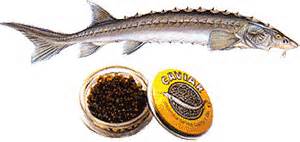
A Fish That Didn’t Evolve + An Industry That Did = Modern Caviar

Sturgeon, sometimes referred to as the dinosaurs of the sea, have been around from time immemorial, and even look prehistoric.

Sturgeon

Sturgeon

These monsters used to be the source of the finest caviar from Russia and the Caspian Sea, real caviar not salmon roe or any other delicious fish eggs nice in their own right but not caviar to connoisseurs around the world. Then, due to over fishing, pollution, truth in labeling issues, you name it, the supply went away, other than some dubious black market product.

In the late 20th century, some enterprising entrepreneurs, notably in Uruguay and California (the best known being marine biologist Serge Doroshov, a Soviet defector who is a professor at UC Davis) took to the task of importing live sturgeon to initiate breeding programs.

caviar osetra spoon

Osetra Caviar

The rest is delicious history.

It took many years to establish the populations, but sturgeons are now farmed sustainably, guaranteeing us a long term, albeit expensive, source of this treat. The males are harvested after mating, and the females are harvested when their roe is ready, then both the roe and the flesh are sold. The fisheries are managed carefully to ensure the health of these rare and expensive fish, and their staying viable as a species over time.

Sterling Caviar in Sacramento, Ca (www.sterlingcaviar.com) and Black River Caviar in Rio Negro, Uruguay (www.blackrivercaviar.com) are two of the world’s leading producers of sustainable caviar.

The former is the source of most caviar sold by Petrossian  (www.petrossian.com ).

Caviar in the Surf

Caviar in the Surf

The later is the exclusive supplier to Seabourn, a line of small cruise ships known for its “Caviar in the Surf” beach barbecues.( http://blog.seabourn.com/seabourn-events-caviar-in-the-surf)
There are several types of sturgeon caviar marketed, Osetra being the most common nowadays, but the farmers are working to bring back the Beluga.  When you see the word Mallosol on a caviar container, it means that the quality is high enough to require only a small amount of salt in its preservation.

How much does it cost?  If you have to ask, you cannot afford it, but, if you must, check out the websites and let MyMEGusta know when your shipment arrives!

Flying Fish?

Little sailboats? The tiny roe that grace sushi? Lobsters or king salmon crisscrossing each other as they speed coast to coast nestled into their personal styrofoam cabins on Air FedEx?

Flying Fish!

Flying Fish!

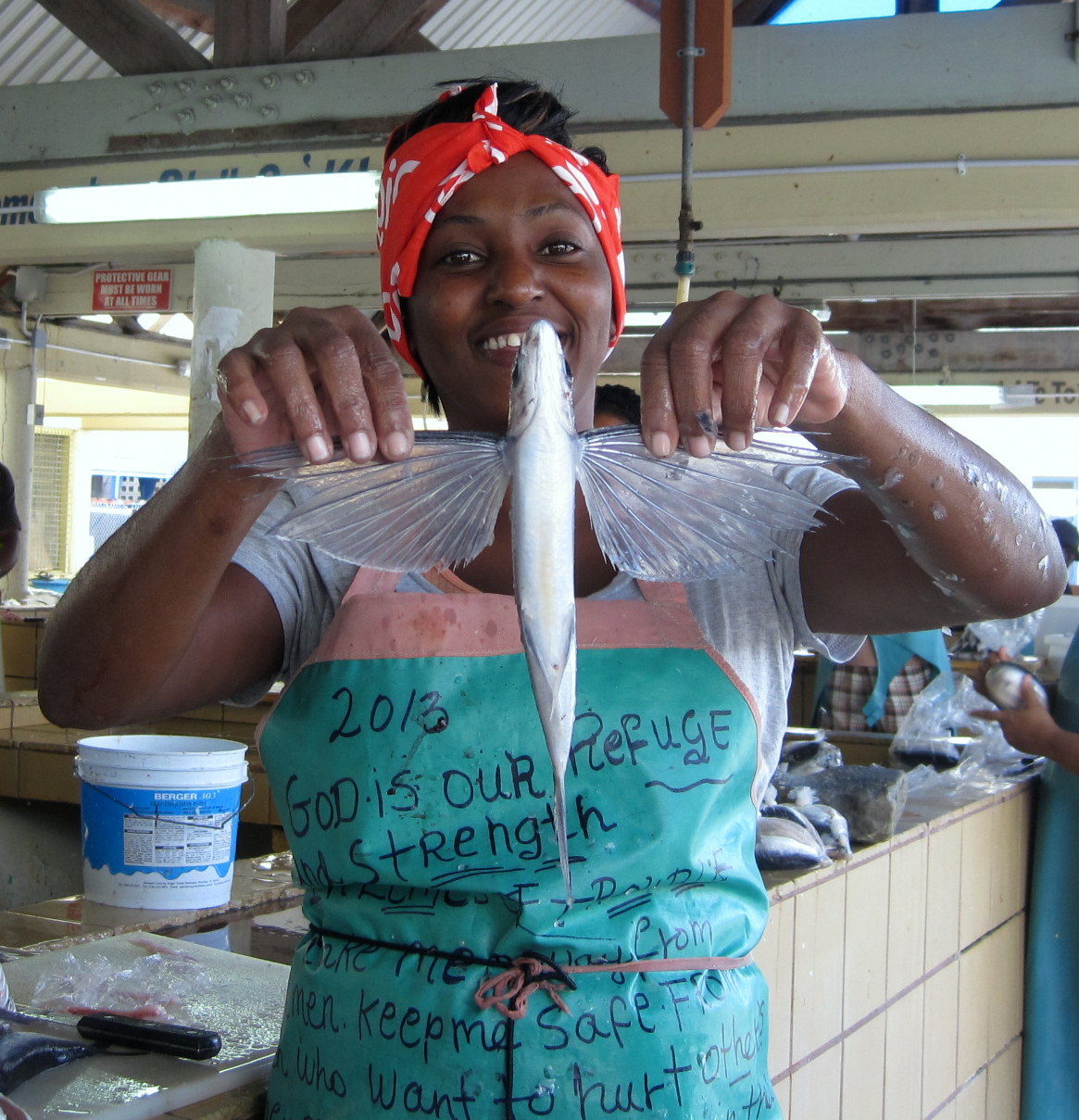
No! Real flying fish! The birdlike treats that flit flit flit up and skim the Caribbean water as you kayak by.

MyMEGusta had always envisioned flying fish as being big, like tuna or marlin, but not so. They are little creatures, bigger than robins, but smaller and sleeker than pigeons.

flying fish coin

Dollar Coin in Barbados

It all makes sense when you think about Japanese tobiko (flying fish roe) being tiny, so the fish should be, too.  Flying fish are found throughout the world, and it is apparent that the sushi grade tobiko we enjoy in the United States comes from Hawaii and Japan. It does not seem to be captured at all in Barbados where the fish themselves are the treasure, never served raw, unless some enterprising chef is introducing this under myMEGusta’s radar.

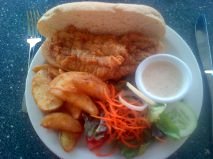
The national dish of Barbados, even featured on the local currency,  flying fish are plentiful and relatively inexpensive, enjoyed fried in a “Bayan” spiced  batter or grilled, and often served as “cutters”, the local term for subs (or po’ boys or grinders or hoagies or wedges….).  The locals prefer it accompanying “cou cou”, a cornmeal based comfort food.

Flying Fish Cutter

Flying Fish Cutter

The condiment of choice at the Waterfront Cafe, a Bridgetown institution, is a mustard chili sauce, piquant and delicious. (www.waterfrontcafe.com)

Mustard Chili Sauce for Flying Fish Cutter

Mustard Chili Sauce

The Barbadan fish markets, at least as exemplified by the one in Bridgetown, the capital, and Oistins (where the Friday night fish fry is a destination in itself) are really fish receivers and processors, accepting the catch on one end, and spitting out processed primal fish cuts (like a gutted swordfish or shark) as well as filets and steaks destined both for the wholesale chain or the homemaker buying for the day’s dinner.

Oistins Fish Fry

Oistins Fish Fry

The flying fish of Barbados are not sold whole. Rather they pass through an assembly line process – gutters, skinners, fileters – and come out at the end in little plastic bags, ready for the pan. The flavor is simple but distinctive, and the seasonings are assertive, while the texture is similar to a flounder, but a little firmer.

Perhaps a trip to Hawaii to check out the flying fish industry there is in order….

Spiny Lobsters from Sea to Shining Sea

Baja lobster at Villa Ortegas restaurant Puerto Nuevo

2014 has been a good year for myMEGusta in terms of spiny lobsters!

Spiny Lobster at Puerto Nuevo

Spiny Lobster at Puerto Nuevo

First there was a trip to Baja, Mexico, near San Diego, CA, where we feasted at Villa Ortegas, a renowned  spiny lobster restaurant in the town of Puerto Nuevo, known worldwide for these tasty crustaceans.

http://www.puertonuevolobster.com/

Months later, in Playa del Carmen on the shores of the Caribbean Sea, they reappeared.

Spiny Lobster in Playa del Carmen

Spiny Lobster in Playa del Carmen

Both preparations were iconic for where they were made:

Traditionally Mexican in Baja, the lobsters were served with refried beans, rice, tortillas, salsas and limes, intended to be consumed forkful by forkful or made into delicate little soft tacos, seasoned to taste.

Traditionally Italianate in Playa del Carmen (see myMEGusta’s recent posting “Pasta on the Riviera!”), the sparklingly fresh lobster was simply dressed, in olive oil, fresh tomatoes, and basil, tossed with freshly made tagliatelle.

Most of us from the Northeastern United States tend to disparage the spiny lobster, as we usually get it in Florida restaurants where it is served with butter and simply does not deliver on the flavor profile we expect, that of our beloved cold water beasts from Canada, Maine and elsewhere in New England.

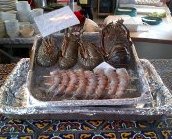
Fresh! Nice shrimp, too!

Fresh! Nice shrimp, too!

The trick with the spiny is to serve it more imaginatively, like the chefs of Mexico have mastered.  The texture and flavor of the lobster meat are complemented beautifully by accoutrements like those salsas and Mediterranean flavors.

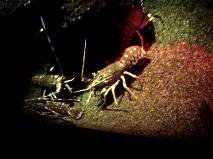
Spiny Losbters on the Hoof

Spiny Losbters on the Hoof

One curiosity for myMEGusta is how different but closely related species of warm water lobsters manage to be found on both sides of the Americas, in the Atlantic and in the Pacific Oceans, in fact in most warm water seas around the world. Summarizing a scientific article* on the subject, spiny lobsters don’t just live in warm water and can live in deep, cold water as well. Hence, they migrated all over and inhabit all of the earth’s oceans, but distinct species live in separate geographical regions, and some of the transitional species are extinct, found only in fossils.

Isn’t the internet great?

*Evolution, Vol. 21, No. 4 (Dec. 1967), The Evolution of Spiny Lobsters: a Study of Evolution in the Marine Environment by R. W. George and A. R. Main

Pasta on the Riviera!

No, not THAT Riveria.  The Mayan Riviera in the Yucatan Peninsula, just south of Cancun in Mexico, abutting the Caribbean Sea.

Fresh Spaghetti with Freshly made Pesto!

Fresh Spaghetti with Freshly made Pesto!

The scene is Playa del Carmen, a somewhat low key, almost European, seaside town only recently rising (or falling?) to major developers and high end merchandise sellers. Rhinestone sombreros are morphing into Swarovski Crystals.

The dinners, by myMEGusta’s and her travel companions’ choice, are Italian. Delicious, perfect pasta, tasting just as it does in Italy: Cooked to an al dente turn and lightly dressed in elemental sauces, for example a delicious arrabiata made only of lush San Marzano tomatoes, garlic, and chili oil, in a portion reasonable for a normal person to finish.

Strozzapreti!

Strozzapreti!

Another recent standout, a bit more modern and pan-Mediterranean, was homemade whole wheat strozzapreti (similar to cavatelli, and meaning “priest-strangler” in Italian – myMEGusta reports the facts, we do not make these things up) with tomatoes, mussels, olive oil and a fish roe seasoning the chef called liseta (in lieu of the sea urchin on the menu and out of stock).

Then, there are the pizzas: Paper thin crusts, just like in Naples, with the thinnest layers of accoutrements.

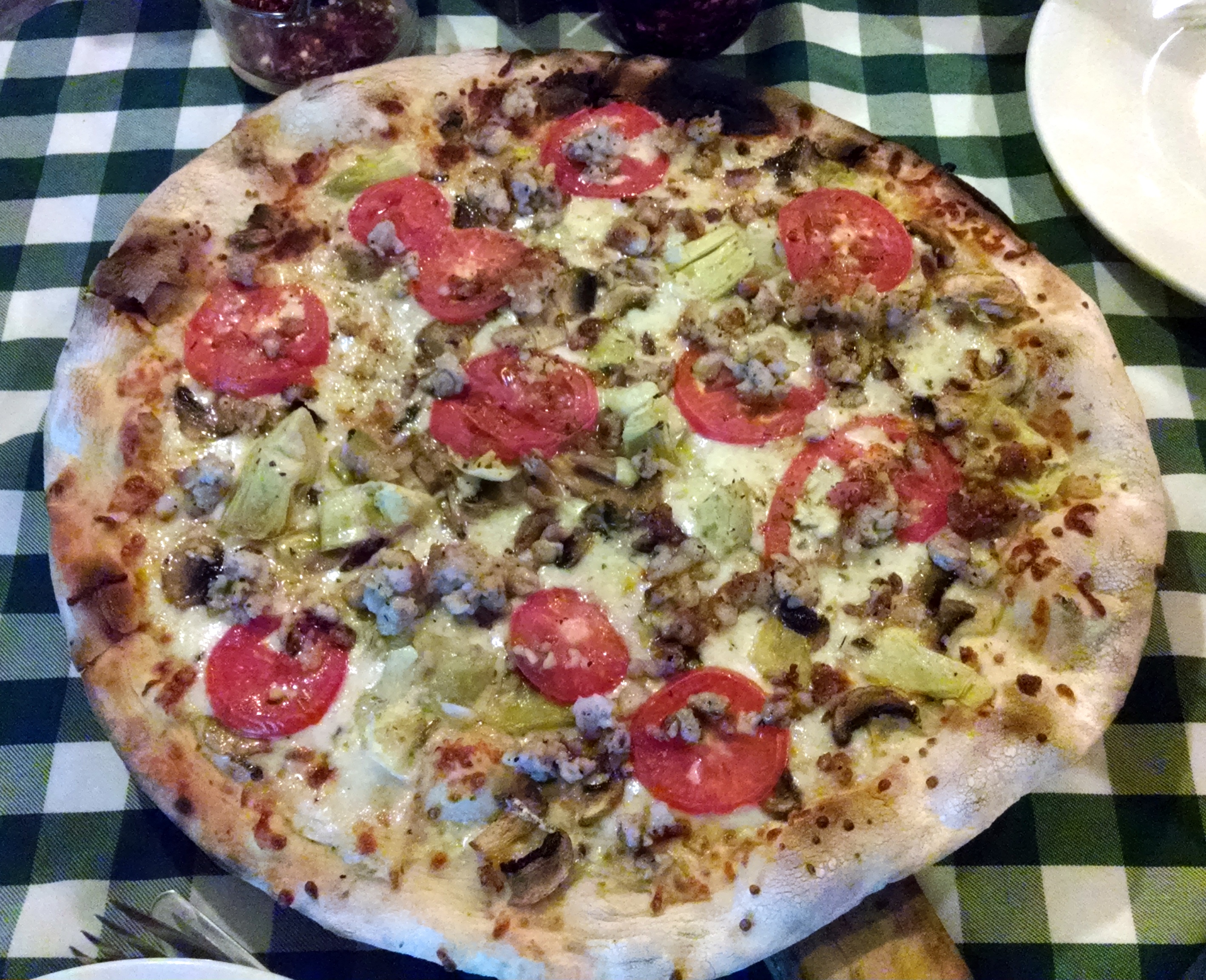
Take the Pizza Luna: Tomatoes, artichokes, mushrooms, a little mozzerella and a little Italian Sausage on a micro thin crust.

Micro-thin Crust Pizza with Artichokes, Tomatoes, Mushrooms, Italian Sausage

Micro-thin Crust Pizza with Artichokes, Tomatoes, Mushrooms, Italian Sausage

Another evening’s appetizer for three was made simply with prosciutto, mushrooms and (a little) cheese on that parchment crust. The waiter took care to ask if we would prefer with tomato sauce as well, probably in his accurate assessment of us as Americans, and smiled when we said, ‘oh no!”

So, how can this be, when a Mexican resort town produces Italian food of consistently authentic quality and it is impossible to get REAL Italian food in most of the United States, supposedly a sophisticated food mecca?

It has to do with unfettered history.

Simple Tomato/Basil Sauce

Simple Tomato/Basil Sauce

There was a wave of Italian immigration to Playa del Carmen in the 1990s, about the time tourism was starting to take off, and when Fifth Avenue germinated as the pedestrian street for dining and shopping. A particular area emerged, known as “La Nueva Quinta”, and while it had its share of taco and steak joints, it was also home to a concentration of Italian restaurants, resulting in the area being known to some aficionados as “Little Italy.”

Combine this trend with the large number of European, particularly Italian, and other international visitors to Playa, there was a perfect storm of sustaining the quality of these restaurants, rather than their being diluted to suit local tastes or American tourism. And it lives on today.

Perhaps another factor is that the indigenous foods of the Mayan Riviera are fresh and boldly flavored, so the “locals” never forced the Italian dishes to become homogenized and bland.

Making Ravioli

Making Ravioli

Walking along Fifth Avenue, there are innumerable Italian restaurants, not all as good as the best, but many “trained” in the art of handmade pasta, some even visible from the street, but, of course, not including the 130 peso all-you-can-eat joints.

You can even go to a beach restaurant and get incredible spaghetti and a more authentic pizza than in most cities in the United States.

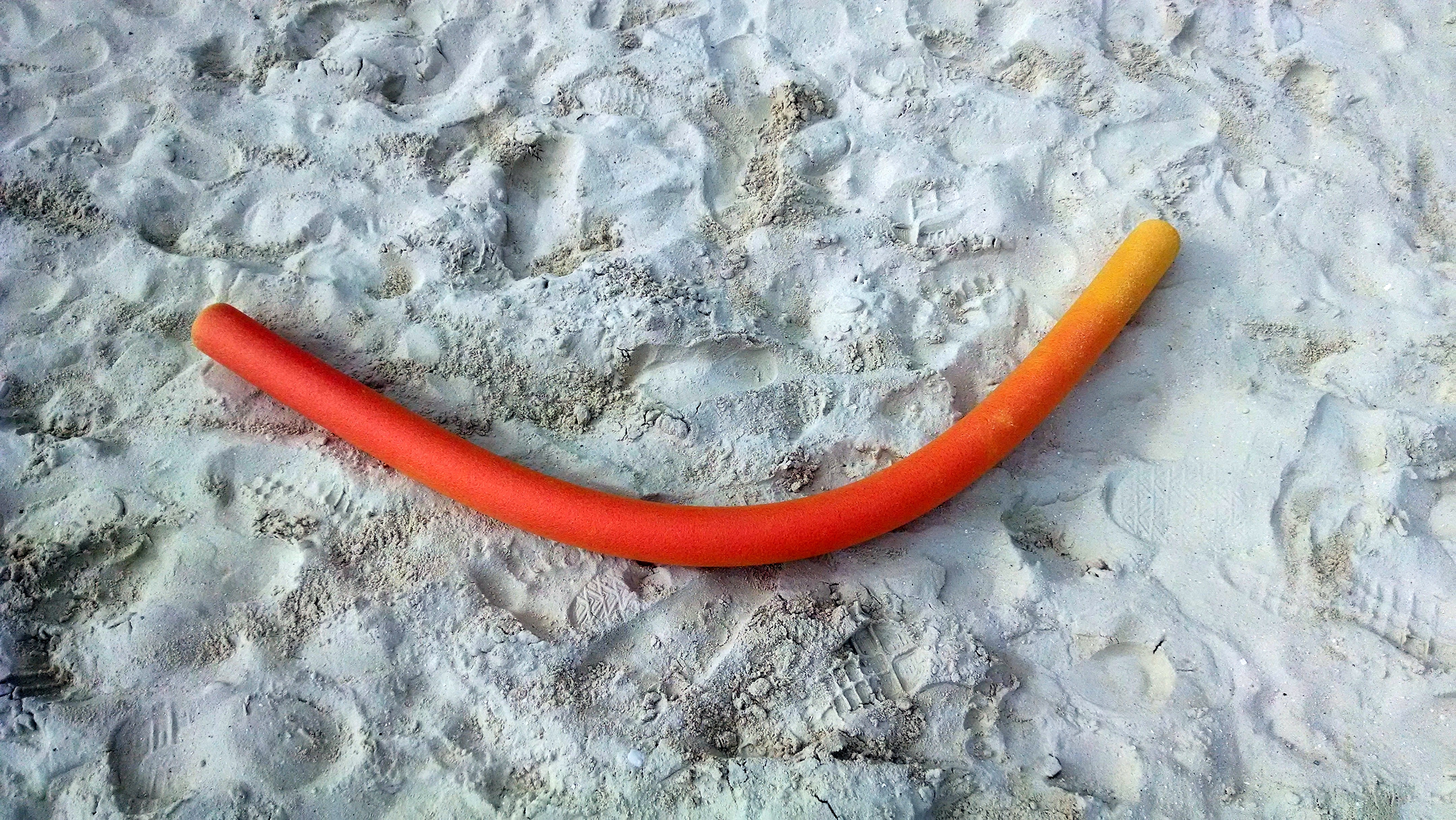
A different kind of noodle on the beach

A different kind of noodle on the beach

News Flash! The Coolest Food/Travel Auction of the Year Is LIVE!

Today’s hot tip from myMEGusta:

Visit  www.charitybuzz.com/ldei for thirteen phenomenal and unique auction packages,  live through December 10, 2013 in support of Les Dames d’Escoffier International .

Read about, and get some vicarious thrills from, these fantastic experiences.  And bid today!

Three Night Napa Valley Wine Experience for Four at Cakebread Cellars

Three Night Napa Valley Wine Experience for Four at Cakebread Cellars

Les Dames d’Escoffier is the only organization of its kind: a world wide philanthropic society of professional women leaders in the fields of food, fine beverage and hospitality. The invitation-only membership, composed of 29 individual chapters across the United States, Canada and the United Kingdom, is highly diversified and reflects the multifaceted fields of contemporary gastronomy and hospitality.

Say Yes to Pianono!

Today myMEGusta is musing on the Philippines.pianono charity

But before we talk about food, take a moment to think about helping those in need there after this month’s deadly typhoon.  A few of the many ways you can help is via organizations such as Save the Children (www.savethechildren.org) , Doctors Without Borders (www.doctorswithoutborders.org), or a charity of your choice. And watch for special fundraisers in your area.

One cannot think of this nation of isles without thinking of the ocean, which brings both the sustenance of seafood and the risks we saw so recently, but also brings an important source of employment to many hard working Philippine people: Cruise ships.

Perhaps I have just been lucky, but all of the sailings I have been on in a decade have been staffed on the “hotel” side by Filipinos, often married couples in which one partner keeps our cabins so sparkly fresh and the other is providing gracious, friendly service in the restaurant or in the kitchen or bar, or perhaps running the front desk or wearing an officer’s stripes on the bridge.

Pianono

Pianono

Pianono in the Making

Pianono in the Making

And, once in a while, the passengers get a special Filipino treat when the cooks let us have a glimpse into the world of staff meals.

One such occasion was in the middle of the Mediterranean Sea, a gorgeous day sailing on the open water, enjoying a buffet on deck.  In addition to the usual spread of (really good) desserts was a giant jelly roll, looking more homemade than most of its companions on the spread.

This little beauty was a Pianono, the traditional Filipino cake roll which is a staple of many homemakers and real comfort food, the filling being like any other family food, either the cook’s whim, grandma’s recipe (therefore the one and only way to make it) or what happens to be on hand.

Pianono

Pianono

Pianono

Pianono

Needless to say, myMEGusta had to taste this, and it was delicious:  Light and very flavorful at the same time.  Pretty, but relatively easy for the home cook to prepare.

Palms Have Hearts, Too

Once upon a time, there was a wonderful restaurant called the Brazilian Pavilion, an airy, aromatic joint on the West Side that emerged after the 1964 World’s Fair in Queens. While Le Discophage in Paris was myMEGusta’s introduction to the glorious cuisine of Brazil, it was at the Brazilian Pavilion that she enjoyed this cuisine stateside for many, many years.

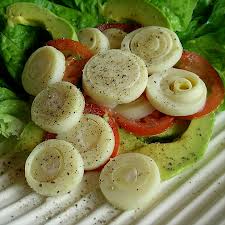
Salad of Hearts of Palm

Salad of Hearts of Palm

One of my favorite dishes there was a hearts of palm salad.

I found it curious, how the inside of a tree could produce this tender treat. Of course, this was before realizing that palm “trees” are not trees in the usual sense, in that they don’t form annual rings. As the tree matures, the base becomes very woody, but not exactly like normal wood. You don’t often find palm furniture, although this is an emerging “sustainable” industry in the tropics.

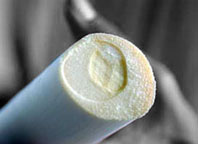
Cross Section

Cross Section

The “hearts” are actually the interior of the tender young shoots, and you can see how each emerging frond is a pointy-ended crescent shape or uneven ringlet.

But don’t take a machete to that palm tree in the living room too soon.

Hearts of palm that are consumed as food are farmed from the types of palm trees which send up multiple shoots, so that the whole plant is not sacrificed to get to the salad ingredient. And they are robust enough to yield a nice portion of the edible vegetable. The Peach Palm is one of these varieties whose new growth can be harvested while sustaining the base plant.

Processing Hearts of Palm

Processing Hearts of Palm

In Hawaii, the Big Island’s Wailea Valley is the United States’ largest producer of hearts of palm, and the leading producer for fine restaurants around the country.

Hearts of palm can be found fresh at some grocery stores, not to mention farmers markets if you happen to live in Hawaii.

Hearts of Palm

Hearts of Palm

Failing that, hearts of palm are also available canned, which actually are not bad, and make a delightful addition to a salad year ‘round. Just like in Brazil!

Babies? Or just little?

It was a sunny summer’s day in a hilltop village somewhere near Florence, Italy, when they were sighted: Tiny little skewered birds being served at the next table, and at a lot of tables.  As bizarre as this appeared, the locals were loving it, so it was a “must try”.  I learned later that these were actually wild songbirds, a traditional dish whose vital components – the birds – are now completely illegal to trap and serve commercially.

It was an interesting glimpse into the past, when people had to trap whatever they could to feed their families.  I was reminded of this when the Greenwich CT Historical Society presented an exhibition of artifacts and photographs documenting the lives of immigrants who came to this country from another part of Italy. Determined and hardworking, these were folks whose families were in poverty and hungry. They sought, and found, new lives here for generations to come. http://blog.ctnews.com/serra/2013/03/29/from-italy-to-america-at-the-greenwich-historical-society/

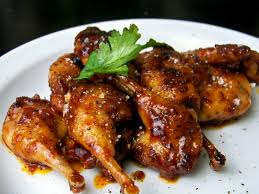
Quail

Quail

Another memorable mini bird encounter was the day I arrived in Paris for the first time.  Shopping for lunch with my hostess, Madame, after an overnight flight (with too much time spent talking and not enough sleeping), my gut reaction as she completed the purchase of quail was to be aghast that we would be eating these tiny, helpless things.

Needless to say, myMEGusta got over that silliness after the first bite, and after realizing that these were just small, fully grown birds, raised for the table.

On the other hand, little vegetables usually are just that, immature babies which be costly and cute, and only sometimes worth the bother.

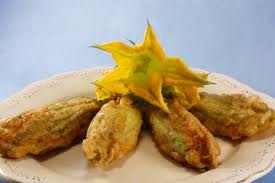
Deep Fried Stuffed Zucchini Blossoms

Deep Fried Stuffed Zucchini Blossoms

Zucchini flowers are a personal favorite, lightly stuffed with cheese and deep fried.

Snap Pea Shoot

Snap Pea Shoot

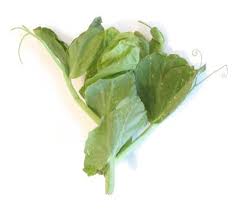
Snap pea shoots, fresh from the backyard garden, often including the emerging pea flower and flash sautéed are best, although pea shoots are available in Asian markets.

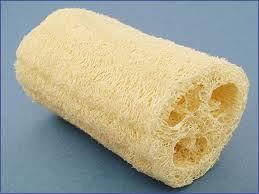
My first sight of a loofah was in a household goods catalogue of some sort, and I eventually came across loofah seeds, quite an interested thing to grow, I thought, but how many loofah sponges does one need?

Loofah Sponge

Loofah Sponge

Then came the discovery of baby loofah prepared Szechuan style, one of my absolute favorite vegetables. Who knew? “Baby” shrimp aren’t babies, by the way, they are just  species which happens to be little.

Baby Loofah with Dried Baby Shrimp

Baby Loofah with Dried Baby Shrimp

On a related topic, tiny garden pests, chipmunks are as cute as can be, but not so amusing when they invade the garden, a behavior one would expect from deer and rabbits. My most recent encounter with this was when attempting to grow cherry tomatoes on my urban front porch (too high for the bunnies and that’s one area the deer don’t bother with). The plant was just on the verge of starting to yield dozens of beautiful, red orbs, when most disappeared overnight. The next day, I viewed the culprit: a chipmunk earnestly climbing up the vine and making off with one that had ripened overnight. So much for that gardening idea and thank god for the farmers’ market.

A Toast to Autumn (and Winter and Spring and Summer)

Cider at the Market!

Cider at the Market!

Cider is the type of year  ‘round beverage that has a special place in myMEGusta’s heart in the fall, when jugs appear in farmers’ markets and at the supermarket, and thoughts go to a heated cupful steeped with a little cinnamon.

Seattle’s Pike Place Market has a really special way to enjoy cider: Frozen Granitas!

Apple Cider Granita

Apple Cider Granita

You’ll find two kinds of cider in those large, seasonal displays: treated (longer shelf life!) and untreated, which means there’s living yeast in that bottle. If you keep it long enough, it will start to ferment, making an adult beverage, not such a bad thing so long as the right people (not the kids) enjoy it at the right time (not before driving). In history, it was the original “home brew” in countless cottages wherever apples grew.

Home Brew

Home Brew

Hard cider, always popular in Europe, particularly in Great Britain and France, is only recently becoming a major libation in the United States, and it is produced with the same care and science as any other fine beverage.  For example, producers control the strains of yeast which inoculate the sweet apple juice, very much like vintners assiduously select the type of yeast added to their must, or grape juice.

Like Belgian beers, some of today’s modern ciders are made with flavorings, such as citrus or lavender to name a few.

Delicious!

Delicious!

One very well known and otherwise brilliant chef had, in the folly of her youth, gone on a gourmet adventure in Normandy and didn’t pay a lot of attention to what she was consuming. Only after arriving back in the States did she find out that the cider she had enjoyed so much on her trip had been the alcoholic type. And that that probably accounted for all the daily impromptu afternoon naps. Fortunately, she was too poor to have a rental car.

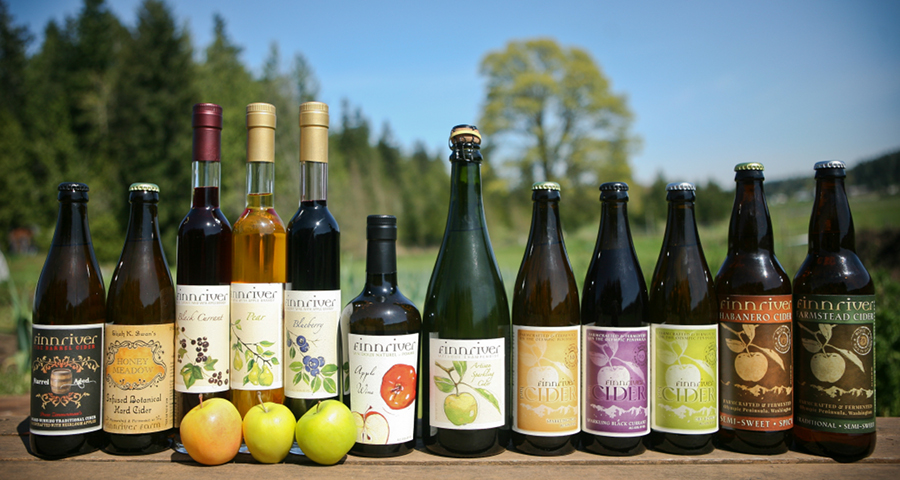
I had the huge pleasure of attending a cider and cheese tasting recently, led by the owner of Finnriver Farm/Cidery located on Washington’s Olympic peninsula www.finnriver.com a small, family operation which is becoming a leader in fine cider production.

MyMEGusta’s favorite factoid was that just as there are different grapes produce different wines, so do different apples, the higher acid varieties being the best. Did you know that throughout the country, with the exception of the Northeast for some reason, many cider apple orchards were destroyed during Prohibition? They are now being replanted, particularly in the Pacific Northwest .

Apple Ciders! Fruit Ciders!

Apple Ciders! Fruit Ciders!

But any apple will work.  In 2012, Finnriver sought donations of fallen apples, especially the odd and misshapen, from whoever will deliver them to the farm, blending them into their special Farmstead cuvee. Ten cents per and with 10% of the proceeds went to the local Food Bank, very creative alchemy turning bruised apples into dollars for nutrition.

Post Navigation